
Few filming destinations on earth offer what the Kathmandu Valley does. Seven UNESCO World Heritage monument zones sit packed into a single metropolitan area, and each one is a working, living site rather than a roped-off museum. For international producers scouting locations that combine visual grandeur with genuine cultural depth, the Valley is close to unmatched. But filming inside a UNESCO-protected zone comes with rules, sensitivities, and logistics that catch first-time crews off guard.
This guide breaks down what every international production needs to know before pointing a camera at Kathmandu’s heritage sites: which zones exist, what permits apply, and how to shoot respectfully in spaces that are still actively used for worship, commerce, and daily life. If your production is still mapping out its full shoot, our ultimate guide to filming in Nepal is a useful starting point alongside this one.
The Seven UNESCO Monument Zones of Kathmandu Valley
Kathmandu Valley was inscribed as a single UNESCO World Heritage property in 1979, made up of seven distinct monument zones. Knowing them individually matters for permitting, since each has its own custodial authority and its own visual character.
Kathmandu Durbar Square (Hanuman Dhoka). The historic seat of royal power for the Malla and Shah dynasties, with the Hanuman Dhoka Palace, the nine-storey Basantapur Tower, and the Kumari Bahal, home to Nepal’s living goddess. It’s dense, ornate, and endlessly filmable, but also one of the busiest and most heavily monitored squares in the city.
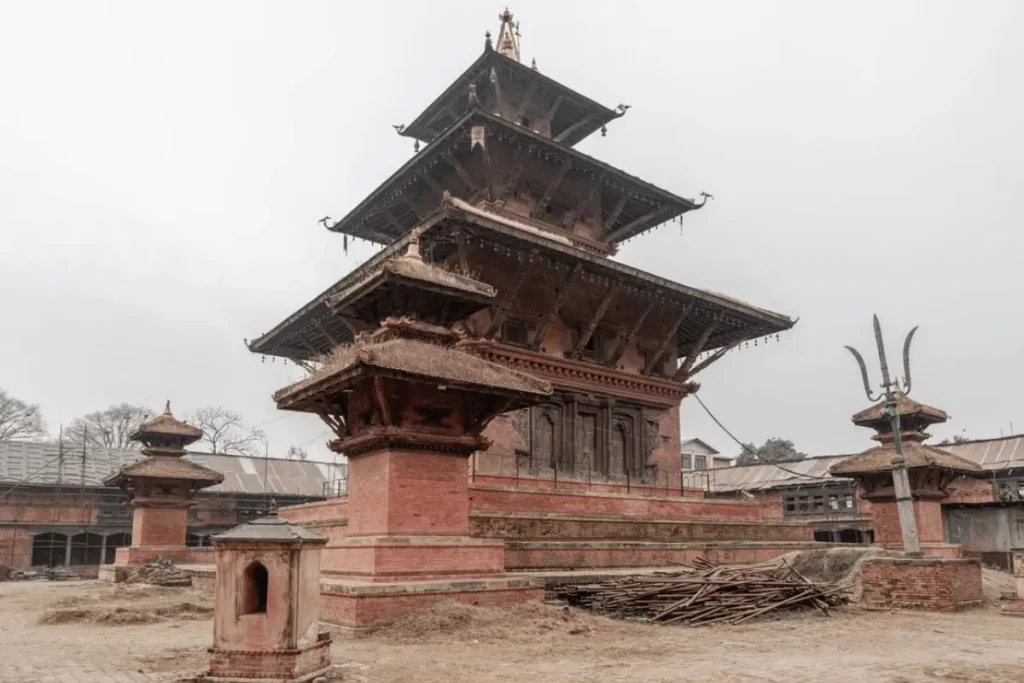
Patan Durbar Square. A showcase of Newari stone and wood carving, centred on the Krishna Mandir temple and the former Malla royal palace, now a museum. It tends to be slightly less crowded than Kathmandu Durbar Square, which can make it easier to secure clean takes.
Bhaktapur Durbar Square. The best-preserved of the three, with a more intact medieval streetscape and fewer modern intrusions in frame. A strong choice for period pieces or anything needing an unbroken historical backdrop. We cover this square in more depth in our piece on filming locations in Nepal beyond Everest.
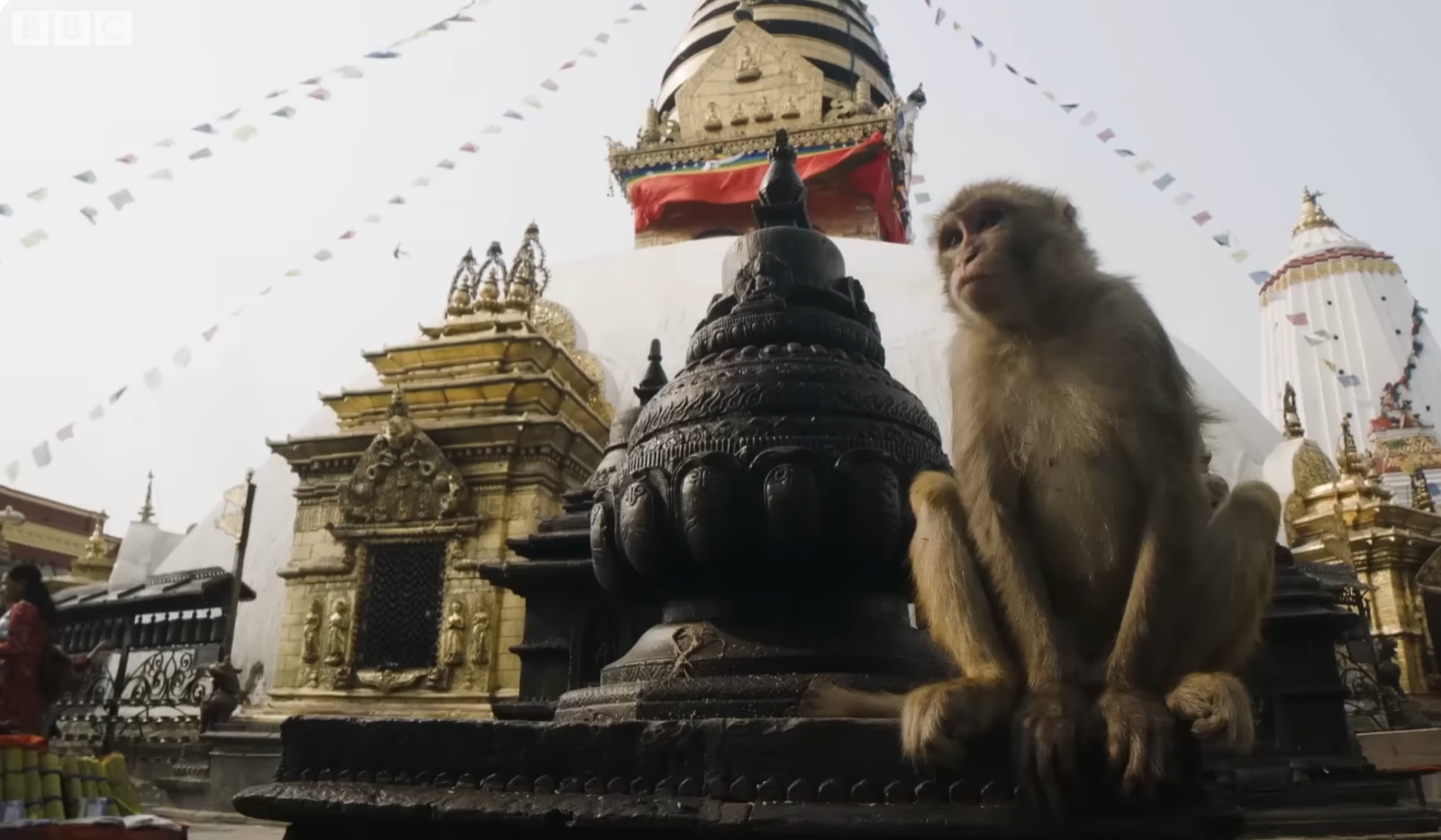
Swayambhunath. The hilltop stupa complex overlooking the Valley, often called the Monkey Temple. Panoramic city views, prayer flags, and near-constant ritual activity make it a favourite for establishing shots and documentary sequences.
Boudhanath. Home to one of the largest stupas in Asia and the centre of Kathmandu’s Tibetan Buddhist community. The surrounding plaza is in near-continuous use for circumambulation (kora), which shapes how and when filming can happen without disrupting worshippers.
Pashupatinath. One of the most sacred Hindu temple complexes in the world, sited on the Bagmati River. It’s also among the most sensitive locations to film, given its role as an active cremation site. More on this below.
Changu Narayan. A quieter, less-visited hilltop temple complex with some of the Valley’s oldest inscriptions, dating to the fifth century. Its relative calm makes it attractive for productions wanting heritage visuals without crowd management headaches.
Permits You’ll Need Before You Shoot
Filming in any of these zones is not covered by a general Nepal filming permit alone. Heritage sites carry an additional layer of approval on top of the standard process. For the full mechanics of the base permit, see our companion guide on film permits in Nepal.
- Ministry of Communication and Information Technology (MoCIT): issues the core filming permit for all productions in Nepal, foreign and domestic.
- Department of Archaeology (DoA) consent: required specifically for filming inside any of the archaeological monument zones. This covers Kathmandu, Patan, and Bhaktapur Durbar Squares, Swayambhunath, Boudhanath, and Changu Narayan.
- Pashupati Area Development Trust consent: a separate approval needed specifically for filming in and around Pashupatinath, given its status as an active religious and cremation site.
- Civil Aviation Authority of Nepal: a further layer if the production plans any drone work over these zones, which is tightly restricted given the density of temples, crowds, and low-altitude airspace. Our drone filming permit guide walks through this process in detail.
In practice, foreign productions are expected to apply through a registered local production company rather than directly as individuals. Applications from unaffiliated foreign crews are routinely rejected. Required documentation typically includes a script or synopsis, a shot-by-shot location schedule, crew passport details, and an equipment list for customs clearance. Realistic processing time runs one to three weeks depending on the site and the complexity of the shoot, so heritage-zone filming should be locked into the schedule well before the production dates are finalised.
Site-by-Site Filming Considerations
Durbar Squares (Kathmandu, Patan, Bhaktapur). All three remain public, actively used civic spaces. Expect pedestrian traffic, vendors, and local ceremonies to factor into any shooting plan. Early morning calls before the squares fill up are the standard workaround experienced crews use.
Swayambhunath and Boudhanath. Both are functioning Buddhist religious sites with resident monks and daily ritual activity. Filming has to work around, not over, those rhythms. Crews that time shoots to align with rather than interrupt prayer and circumambulation get far better cooperation from site custodians and cleaner footage.
Pashupatinath. This is the site requiring the most care. Cremation ceremonies take place along the Bagmati ghats as an ongoing, sacred practice, not a photo opportunity. Any filming near funeral activity requires explicit permission and a level of discretion well beyond a standard permit. Many productions choose to film only the temple architecture and public areas rather than approach the cremation ghats directly, and that boundary should be respected regardless of what a permit technically allows.
Changu Narayan. The quietest of the seven zones logistically, making it well suited for interviews, dialogue-heavy scenes, or any shoot needing a heritage backdrop without heavy crowd control.
Cultural Etiquette on Set
Beyond the paperwork, filming in an active religious and cultural landscape asks something different of a crew than filming an empty location does.
- Dress and conduct expectations apply to crew as much as to visiting tourists. Modest clothing and quiet behaviour near active shrines are expected, not optional.
- Equipment footprint matters. Large rigs, dollies, and lighting stands can be restricted or disallowed in the more sensitive zones, particularly Pashupatinath, to protect both the physical monuments and the experience of worshippers.
- Local coordinators and site liaisons aren’t just a permitting formality. They’re the difference between a crew that blends in and one that draws unwanted attention from site authorities partway through a shoot day. Our guide to working with local Nepali crew and fixers covers what to expect from that relationship.
- Building in buffer time for unplanned ritual activity, processions, or local festival days is standard practice, not a scheduling failure.
Best Time to Film
Post-monsoon (roughly October through November) and the dry winter months offer the clearest skies and most stable light across all seven zones. This window also overlaps major festival periods like Dashain and Tihar, which bring the squares and stupas to life with colour and ritual activity, a strong pairing for productions wanting both architecture and living culture in frame. Dates and the wider festival calendar are published each year by the Nepal Tourism Board. For a fuller season-by-season breakdown, see our guide on the best time to film in Nepal, and for festival-specific access and etiquette, filming Nepal’s festivals.
Frequently Asked Questions
Do I need a separate permit for each UNESCO site?
No. A single Department of Archaeology consent generally covers the six archaeological zones (three Durbar Squares, Swayambhunath, Boudhanath, Changu Narayan) if your itinerary lists each one. Pashupatinath needs its own separate approval.
How long does permitting take?
One to three weeks once your full application is submitted through a registered local production company. Drone shoots and Pashupatinath sit at the longer end.
Can I fly a drone over these sites?
Only with clearance from the Civil Aviation Authority of Nepal, on top of the standard filming and archaeology permits.
Can I film at Pashupatinath’s cremation ghats?
Filming near active ceremonies requires explicit permission and discretion. Most productions film the temple architecture and public areas instead, out of respect for grieving families.
When is the best time to film?
Post-monsoon (October to November) through winter, for clear light and overlap with festivals like Dashain and Tihar.
Do I need a local production partner?
Yes. Foreign applications submitted without a registered local partner are routinely rejected.
Working With a Local Production Partner
Heritage-zone filming in Kathmandu Valley rewards preparation and local relationships more than almost any other location type in Nepal. A production company with existing standing with the Department of Archaeology, the Pashupati Area Development Trust, and site-level custodians can secure faster approvals, anticipate scheduling conflicts with religious calendars, and keep a crew from unintentionally causing offence in spaces that are, first and foremost, still sacred to the people who use them daily.
For international producers weighing whether these sites belong in a shoot, the short answer is yes, they’re worth the extra planning. Few locations anywhere combine this density of UNESCO-protected architecture with this much living, breathing cultural texture in frame.
Planning a shoot inside Kathmandu Valley’s heritage zones? Icefall Productions handles permitting, local liaison, and on-ground production support across all seven UNESCO monument zones. Get in touch to talk through your locations and schedule, or explore our full production services in Nepal.