
By Icefall Productions content production team, Icefall Productions · Published June 2026 · Last reviewed June 2026 · 14 min read
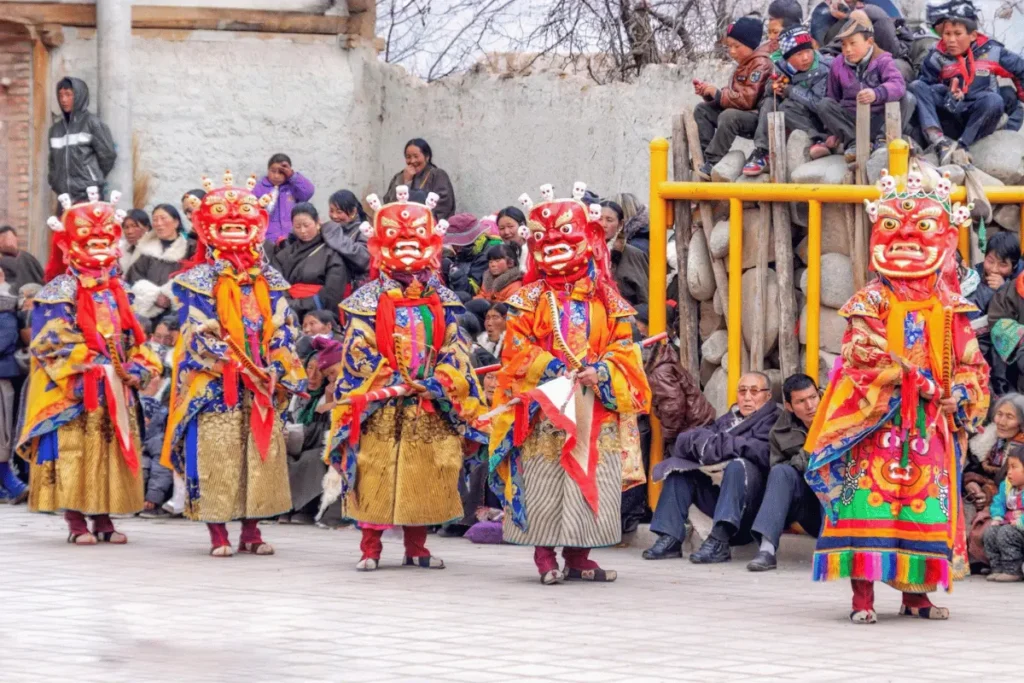
Filming Nepal’s festivals is one of the most visually rich cultural ecosystems in the world. For filmmakers, documentary producers, broadcasters, and streaming platforms, the country offers access to rituals, public processions, monastery ceremonies, and living heritage traditions that remain deeply connected to everyday community life.
However, filming festivals in Nepal successfully requires far more than obtaining a government filming permit coordinated through the Nepal Film Development Board and related authorities. . International productions that arrive without cultural preparation often encounter restricted access, community hesitation, logistical complications, or missed opportunities for meaningful storytelling.
At Icefall Productions, our cultural production coordinators, field producers, and local fixers have supported festival filming projects across Nepal for nearly two decades. Our work has included documentary support in Kathmandu Valley, monastery coordination in the Khumbu region, and restricted-area production logistics in Upper Mustang.
This guide explains how international productions can responsibly access, film, and navigate Nepal’s major festivals while maintaining strong cultural relationships and meeting production standards expected by global broadcasters and streaming platforms.
Why Nepal’s Festivals Are Cinematically Different
Many cultural festivals around the world now operate primarily as tourism-oriented performances. Nepal remains different because most major festivals continue to exist first and foremost for local communities, religious practice, and living tradition rather than for spectators or cameras.
This distinction matters significantly for documentary filmmaking.
The Kumari chariot procession during Indra Jatra attracts enormous local participation regardless of international media coverage. Mani Rimdu at Tengboche Monastery is still performed as a sacred Buddhist ceremony by monks for spiritual purposes. Tiji Festival in Upper Mustang continues to function as a deeply rooted communal ritual tied to the cultural identity of the region.
For filmmakers, this creates an authenticity that translates strongly on screen. Audience engagement is often higher when cultural events feel lived-in rather than staged. Productions filmed in Nepal frequently achieve stronger emotional resonance because the festivals retain their original social and religious function.
This is also why preparation and cultural sensitivity are essential. Productions are entering active community spaces rather than controlled performance environments.
Why International Productions Choose Nepal for Festival Filming
Nepal offers several unique production advantages for cultural filmmaking:
- Extraordinary visual diversity within short travel distances
- Living Hindu and Buddhist traditions still actively practiced
- Himalayan landscapes integrated directly into cultural events
- Dense medieval urban architecture in Kathmandu Valley
- High-altitude monastery ceremonies unavailable elsewhere
- Strong documentary potential for human-centered storytelling
- Increasing international production support infrastructure
For productions seeking authentic cultural storytelling, Nepal provides cinematic material that is difficult to replicate anywhere else in the world.
The 6 Nepal Festivals Most Sought After by International Film Productions
1. Indra Jatra, Kathmandu (August to September)
Indra Jatra is Kathmandu’s largest and most visually dynamic street festival. The celebration combines masked Lakhey dances, towering ceremonial poles, chariot processions, traditional music, and the rare public appearances of the Kumari, Nepal’s living goddess.
The festival takes place primarily around Kathmandu Durbar Square, a UNESCO World Heritage Site that becomes one of the most visually intense filming environments in South Asia during the celebration.
For documentary and broadcast productions, the Kumari chariot procession is often the central filming objective. The movement of the chariot through densely packed medieval streets surrounded by thousands of residents creates extraordinary visual scale and emotional energy.
Production Considerations
The best filming strategy for Indra Jatra combines elevated crowd-position cinematography with longer focal lengths for emotional close-up work.
Important operational considerations include:
- Advance access coordination for rooftop positions
- Department of Archaeology clearance for monument zones
- Crowd movement planning for camera teams
- Lightweight mobile camera setups
- Cultural liaison coordination with festival authorities
Icefall Productions maintains established relationships with local festival stakeholders and can coordinate production access for international crews filming in Kathmandu Valley.
2. Mani Rimdu, Tengboche Monastery, Khumbu (October to November)
Mani Rimdu is a sacred Sherpa Buddhist festival held annually at Tengboche Monastery in the Everest region at approximately 3,867 metres above sea level.
The festival features Chham masked dances performed by monks representing the triumph of Buddhism over destructive forces. Cinematically, the setting is exceptional. Ama Dablam rises directly behind the monastery, creating one of the most compositionally remarkable cultural filming environments anywhere in the Himalayas.
For filmmakers, Mani Rimdu combines several rare elements simultaneously:
- Active monastic ritual
- High-altitude Himalayan landscape
- Traditional Buddhist ceremonial costume
- Strong atmospheric conditions including mountain light and incense-filled interiors
- Access to Sherpa cultural heritage
Access and Logistics
Filming Mani Rimdu requires significantly more preparation than lower-altitude festivals.
Productions typically need:
- Sagarmatha National Park permits
- Monastery filming approval
- Head Lama permission for sensitive areas
- High-altitude acclimatization planning
- Helicopter contingency support
- Weather flexibility in shooting schedules
Because Tengboche sits within a remote mountain environment, crews should also prepare for battery performance reduction, unpredictable mountain weather, and altitude-related production delays.
3. Tiji Festival, Lo Manthang, Upper Mustang (April to May)
Tiji Festival is one of Nepal’s most visually rare and logistically demanding cultural events.
Held annually in Lo Manthang, the ancient walled capital of the former Kingdom of Lo, the festival features three days of ceremonial masked dances symbolizing the defeat of destructive forces and the restoration of harmony.
The environment itself contributes enormously to the cinematic value of the festival:
- Fortress-like medieval architecture
- Arid trans-Himalayan desert landscapes
- Ancient monasteries
- Restricted-access mountain terrain
- Minimal modern visual intrusion
For documentary productions focused on disappearing heritage traditions, Tiji is frequently considered one of the strongest cultural filming opportunities in the Himalayas.
Permit and Timeline Requirements
Upper Mustang is a restricted region requiring special government authorization.
Productions generally require:
- Restricted Area Permits
- Ministry-level filming permissions
- Local municipality coordination
- Advance transportation logistics
- High-altitude safety planning
Due to permit processing complexity and accommodation limitations, serious productions should begin planning at least six months before the festival.
4. Tihar, Nationwide (October to November)
Tihar, widely known as Nepal’s Festival of Lights, is one of the country’s most accessible and emotionally engaging festivals for international productions.
Unlike festivals concentrated in a single city square or monastery complex, Tihar unfolds across homes, streets, neighborhoods, and public spaces throughout Nepal.
Each day carries a distinct visual identity:
- Kukur Tihar honors dogs with flower garlands and ceremonial offerings
- Gai Tihar celebrates cows and prosperity
- Lakshmi Puja transforms homes with oil lamps and floral decorations
- Bhai Tika focuses on sibling relationships and family rituals
For filmmakers, Tihar provides an opportunity to capture intimate domestic storytelling rather than only large-scale public processions.
Why Tihar Works Well for First-Time Productions
Tihar is particularly suitable for productions entering Nepal for the first time because:
- Access barriers are lower
- Filming can occur across multiple locations
- Smaller crews integrate more easily into communities
- Visual diversity is extremely high
- Emotional themes translate well internationally
The festival is especially effective for human-centered documentary narratives and cultural travel programming.
5. Dashain, Nationwide (September to October)
Dashain is Nepal’s largest and most widely celebrated festival. Lasting approximately fifteen days, it combines religious ritual, family reunion, seasonal celebration, and public festivity.
For filmmakers, Dashain offers strong emotional storytelling opportunities because the festival centers heavily around intergenerational family relationships.
The tika ceremony is particularly powerful on camera. Elders place red tika paste and flower petals on younger family members while offering blessings. Even audiences unfamiliar with Hindu traditions typically understand the emotional meaning immediately.
Other visually rich elements include:
- Kite flying above Kathmandu Valley
- Rural family gatherings
- Bamboo swings constructed in villages
- Traditional music and dance
- Agricultural and seasonal rituals
Editorial Considerations
Dashain also includes ritual animal sacrifice in some communities.
International productions should approach this subject with careful editorial context and cultural sensitivity rather than presenting it purely for visual shock value. Productions that contextualize the practice historically and religiously tend to receive stronger audience reception and community cooperation.
6. Rato Machhindranath Chariot Festival, Patan (April to May)
The Rato Machhindranath Chariot Festival is among the oldest continuously performed chariot festivals in the world.
Held in Patan, the festival centers around a towering ceremonial chariot that can exceed fifteen metres in height. Teams of devotees pull the structure through narrow Newari streets lined with centuries-old architecture.
The visual layering available to filmmakers is exceptional:
- Medieval urban design
- Massive hand-built ceremonial structures
- Dense community participation
- Traditional Newari culture
- Religious symbolism integrated into daily urban life
For heritage-focused documentary work, the festival provides rare access to a living urban tradition that has continued for centuries.
Production Challenges
The streets of Patan can become extremely crowded during key procession periods.
Successful productions usually prioritize:
- Smaller mobile camera systems
- Advance route scouting
- Rooftop filming coordination
- Lightweight audio setups
- Local crowd coordination support
Production Protocols for Festival Filming in Nepal
The Consultation Phase: 4 to 6 Weeks Before the Festival
One of the most common misconceptions among foreign productions is that festival access is determined only by government permits.
In reality, successful festival filming depends equally on community consultation, religious coordination, and relationship management.
Professional cultural consultation should begin at least four to six weeks before the festival.
Recommended Preparation Process
- Identify the religious authority, monastery leadership, or festival committee responsible for the event.
- Make introductions through an experienced Nepal-based cultural liaison or production fixer.
- Provide written project information including:
- Documentary topic
- Intended audience
- Distribution platform
- Editorial objectives
- Planned filming approach
- Clarify filming restrictions early, especially regarding:
- Sacred objects
- Monastic interiors
- Children
- Drone use
- Ritual close-ups
- Discuss community contribution arrangements where appropriate, including:
- Local crew employment
- Community screening commitments
- Location compensation
- Cultural consultation fees
Productions that invest in consultation early generally experience smoother access, stronger local cooperation, and fewer operational disruptions.
Technical Approach for Nepal Festival Environments
Festival filming in Nepal is dynamic, crowded, and often unpredictable.
Rigid shot lists frequently fail because processions, rituals, and crowd movement can shift rapidly in response to local conditions.
The most successful production approach is flexible, lightweight, and culturally adaptive.
Recommended Technical Strategy
Minimize Equipment Footprint
Large production rigs can become operationally difficult inside dense festival crowds.
Compact cinema cameras, lightweight stabilizers, and minimal support gear generally perform better than oversized setups.
Use Multiple Camera Operators
A two-camera structure is often ideal:
- One operator captures environmental wide shots
- One operator focuses on emotional close-up detail
Many productions fail to capture emotional depth because they focus exclusively on spectacle and crowd scale.
Maintain Cultural Mediation
A cultural liaison should remain physically present with the production team throughout filming.
This is operationally important for:
- Community communication
- Access coordination
- Conflict prevention
- Translation support
- Ethical decision-making
Respect Ritual Movement Paths
Camera positioning should never obstruct:
- Chariot movement
- Monastic pathways
- Ritual entrances
- Devotional processions
- Ceremonial objects
Maintaining spatial respect significantly affects how communities respond to a production team.
Frequently Asked Questions About Filming Nepal’s Festivals
Can the Kumari, Nepal’s Living Goddess, Be Filmed?
Yes, but only during designated public appearances.
The Kumari can typically be filmed during Indra Jatra processions and approved ceremonial events. Filming inside the Kumari residence or during private activities is generally not permitted.
Productions should always coordinate access conditions in advance through local authorities and cultural representatives.
What Is the Best Nepal Festival for a First Documentary Production?
Tihar is usually the most accessible starting point for first-time international productions.
The festival combines strong visuals with manageable logistics and broad geographic flexibility.
For productions seeking the most visually unique Himalayan cultural material, Mani Rimdu at Tengboche Monastery offers extraordinary cinematic potential but requires substantially more logistical preparation.
How Far in Advance Should Festival Filming Be Planned?
Recommended minimum preparation timelines:
Standard Ministry filming permits: 3 weeks minimum
UNESCO heritage site permits: 4 weeks minimum
Restricted area permits for Upper Mustang: 6 months minimum
Community consultation and access coordination: 4 to 6 weeks minimum
Major international productions often begin planning significantly earlier.
Can Drone Filming Be Used During Festivals?
Drone filming in Nepal is regulated and requires separate authorization depending on the region and proximity to heritage zones, airports, monasteries, or military-sensitive areas.
Many festival environments are also too crowded for safe drone operation without detailed planning.
Productions should secure drone clearance well in advance and avoid assuming approval will be granted automatically.
Why International Productions Work With Local Festival Fixers
Festival filming in Nepal operates at the intersection of logistics, culture, religion, and relationship management.
An experienced local production partner can help international teams:
Navigate government permits
Coordinate monastery and festival access
Hire local crews and translators
Arrange transportation and accommodation
Manage high-altitude logistics
Reduce cultural misunderstandings
Improve production efficiency on location
For many productions, strong local coordination becomes the difference between parital and exceptional access.
Film Nepal’s Festivals Responsibly
Nepal offers some of the most visually compelling cultural filmmaking opportunities anywhere in the world. However, the strongest productions are usually those that approach the country with preparation, patience, and respect for the communities hosting the camera.
Festival filming in Nepal is not simply about capturing spectacle. It is about understanding the meaning behind the rituals, building trust with communities, and creating documentary work that reflects the depth of the culture being filmed.
At Icefall Productions, we provide cultural production support, local fixing, festival coordination, permit assistance, and high-altitude logistics for international productions filming across Nepal.
About Icefall Productions
Icefall Productions is a Nepal-based production support company specializing in documentary production, high-altitude filming logistics, cultural coordination, location management, and international production support across the Himalayas.
The company has supported productions across Kathmandu Valley, Everest region, Mustang, Annapurna, and remote Himalayan regions for broadcasters, documentary filmmakers, commercial productions, and international media teams.