
Long before anyone talks about locations or permits, every international producer planning a shoot in Nepal runs into the same question: who’s actually going to be on set?
Do you bring the crew you already trust and know how to work with? Or do you build your local crew in Nepal with people who know the country?
Most producers who’ve done this a few times will tell you the real answer is: both. The productions that go smoothly almost always use a hybrid crew: a small core of creative leads who fly in, surrounded by experienced local professionals handling everything else. It’s not a compromise. It’s usually the smarter plan, and it tends to save money and headaches in roughly equal measure.
Ask a Better Question First
The instinct is to ask “who should we bring?” That’s the wrong starting point, because it treats every role the same way.
The better question is: which roles need our creative vision, and which roles need local knowledge?
Once you sort your crew list along that line, most of the hard decisions make themselves.
Roles Worth Flying In
Director: This one’s rarely up for debate. The director carries the story, the performances, the client’s expectations, the pacing, the whole creative through-line. Unless you’re specifically hiring a Nepali director for the project, this role travels with you.
Director of Photography: This is usually the decision producers agonize over most. If the look of the project is the project (a luxury commercial, a feature, a heavily branded campaign) bring your own DP. But it’s increasingly common for productions to pair their DP with a local camera team, or work directly with an experienced Nepali cinematographer. Local eyes on mountain light, the shifting weather patterns tracked by Nepal’s Department of Hydrology and Meteorology, and remote access tend to prevent the kind of surprises that blow schedules apart. Often, the result is a stronger production, not a diluted one.
Sound: flexible: For dialogue-heavy shoots, plenty of producers still bring their own production sound mixer, and that’s a reasonable call. Boom operators and sound assistants, though, are easy to hire locally and free up budget without touching quality.
Roles Where You Should Hire Local Crew in Nepal
This is where most of the production actually lives, and where local crew consistently outperforms flying people in.
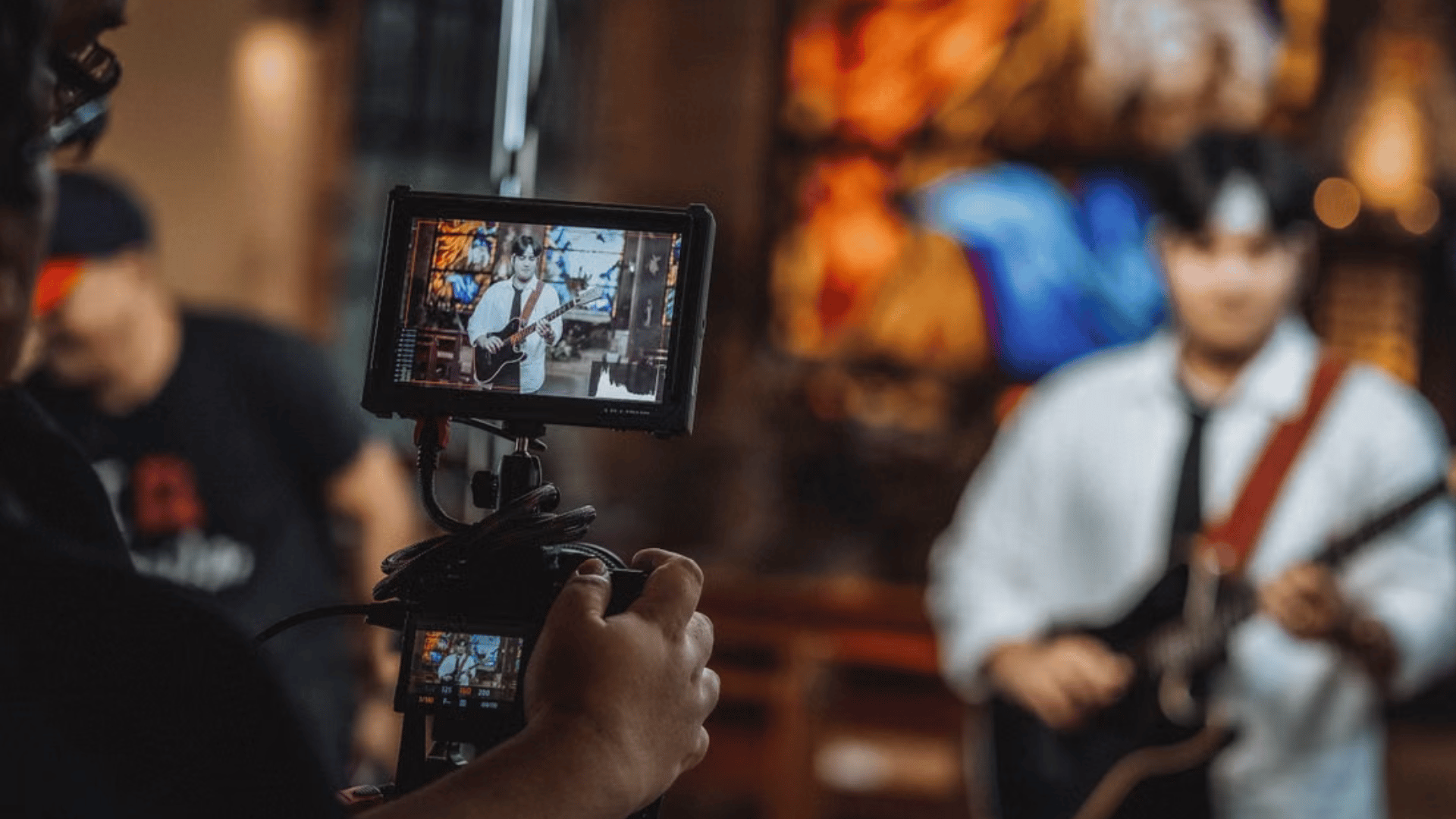
Camera department: Focus pullers, DITs, camera assistants: experienced local techs already know the rental houses, the suppliers, the transport logistics, and how gear behaves at altitude. They also slot into a visiting DP’s workflow faster than you’d expect.
Gaffer and lighting crew: This is one of the easiest departments to localize entirely. A good Nepali gaffer already knows the power situation, which generators are reliable, where the gear comes from, and how to rig safely on terrain that doesn’t behave like a soundstage. Many productions bring nothing more than a lighting plan and build the rest of the department on arrival.
Grip crew: Grip work is basically applied logistics: road access, terrain, vehicle limits, safety calls that change by location. Local grips have already solved these problems a hundred times over.
Drone operators: Airspace rules shift from country to country, and Nepal is no exception. Local, licensed drone operators know the restricted zones, handle registration through the Civil Aviation Authority of Nepal, navigate Nepal’s drone filming permit process, read the weather correctly, and spare you the logistics of flying specialized equipment across borders. This is a role almost nobody flies in anymore.
Production coordinator: Arguably the single highest-leverage local hire on the whole crew, and often the same person a film fixer in Nepal role describes. This is the person holding the line between your producers, the crew, the suppliers, hotels, drivers, local authorities like the Film Development Board, and vendors. A good coordinator is the reason your week runs on time.
Production assistants: The backbone of any set, anywhere, but especially valuable locally, since they’re plugged into the community, the transportation, and the small fires that need putting out before they become big ones.
Location manager: Far more than someone who unlocks a gate. A strong local location manager handles location scouting and permitting, negotiates access, manages community relationships, understands regulations that aren’t written down anywhere (including clearances required by the Department of National Parks and Wildlife Conservation for shoots inside protected areas), and can see a logistical problem coming a day before it happens. That kind of foresight regularly saves entire shoot days.
Drivers: Mountain roads, shifting weather, unpredictable traffic: this isn’t a place to learn on the job. Professional local drivers know the alternate routes and the terrain well enough to keep a schedule intact.
Medic or safety officer: For anything remote or high-altitude, a local medical professional who already knows the nearest facilities and how emergencies actually get handled here isn’t optional. It’s the safety net.
What a Hybrid Crew Usually Looks Like
Flown in:
- Director
- Producer
- DP (depending on the project)
- Key department heads
- Lead sound mixer, if the production wants continuity here
Hired locally:
- Assistant directors
- Camera assistants
- Gaffers and grip crew
- Production coordinators and PAs
- Location managers
- Drivers
- Drone operators
- Safety personnel and logistics teams
It’s Not Just About the Budget
It’s tempting to frame local hiring purely as a cost-saving move, but that undersells it. The real value is access: to people who already understand what filming in Nepal actually involves. Reading mountain roads. Coordinating permits that don’t work like they do back home. Adjusting on the fly when the weather has other plans, which in Nepal, it often will.
Crews who already live with these realities don’t just cut costs. They keep a production flexible enough to absorb the unexpected without losing the day.
Frequently Asked Questions
Is it cheaper to hire local crew in Nepal than to fly in a full team?
Almost always, yes, but the savings go beyond day rates and flights. Local crew already have their own gear relationships, transport, and accommodation sorted out, so you’re not paying to fly, house, and feed people who’d cost the same or less to hire on the ground.
Can I bring my own DP and still work with a local camera team?
Yes, and it’s one of the more common setups. Your DP handles the creative vision while a local camera team (camera assistants, focus pullers, DITs) handles the equipment, terrain, and day-to-day logistics. Most visiting DPs find this pairing speeds up their workflow rather than slowing it down.
Do I need a local production coordinator even for a small shoot?
Pretty much always. Even on a lean production, someone needs to be the communication hub between your crew, vendors, drivers, hotels, and local authorities. This is one of the few roles where skipping the local hire tends to cost you more time than it saves.
Are foreign drone operators allowed to fly in Nepal?
Drone rules in Nepal are strict and change depending on the region, altitude, and proximity to restricted areas like airports or protected zones. Every drone must be registered with the Civil Aviation Authority of Nepal before it can legally fly. Rather than navigating that from abroad, most productions hire a licensed local drone operator who already holds the right permits and knows where you can and can’t fly.
How far in advance should I confirm my local crew?
The earlier the better, especially for specialized roles like gaffers, location managers, and drone operators, who tend to book up during peak filming seasons (typically autumn and spring, when weather and visibility are most reliable). See our full breakdown of the best time to film in Nepal for a season-by-season look. A local production coordinator can usually start assembling the rest of the crew once key creative roles are locked.
What’s the biggest mistake international productions make when staffing a Nepal shoot?
Treating the whole crew as an all-or-nothing decision: either flying everyone in or hiring everyone locally. Neither extreme plays to Nepal’s strengths. The productions that run smoothly are the ones that match each role to whichever team, local or visiting, is actually best positioned to handle it.
The Bottom Line
There’s no universal formula here: every project has its own creative demands and its own logistical shape. But the producers who consistently have smoother shoots aren’t asking whether to bring their own crew or hire locally. They’re asking how to blend the two so each strengthens the other.
Pair your core creative team with experienced local crew in Nepal, and you get local knowledge, established relationships, and operational efficiency, without giving up an inch of your creative vision.
Think of local crew not as support staff, but as an extension of your own team. That mindset, more than any staffing chart, is what actually makes a shoot in Nepal go well.
Planning a Shoot in Nepal?
Figuring out the right mix of local and international crew is exactly the kind of planning Icefall Productions handles every day. For a deeper look at how this works in practice, read our companion guide on local crew and production support in Nepal. Since 2008, we’ve built the crews, secured the permits, and coordinated the logistics behind projects for broadcasters and studios like BBC, National Geographic, Netflix, and Disney+, backed by our full range of production services.
Whether you need a full production team on the ground or just the right local crew in Nepal to round out your own, get in touch and let’s talk through your project, or reach our crewing team directly at crew@icefallproductions.com.