
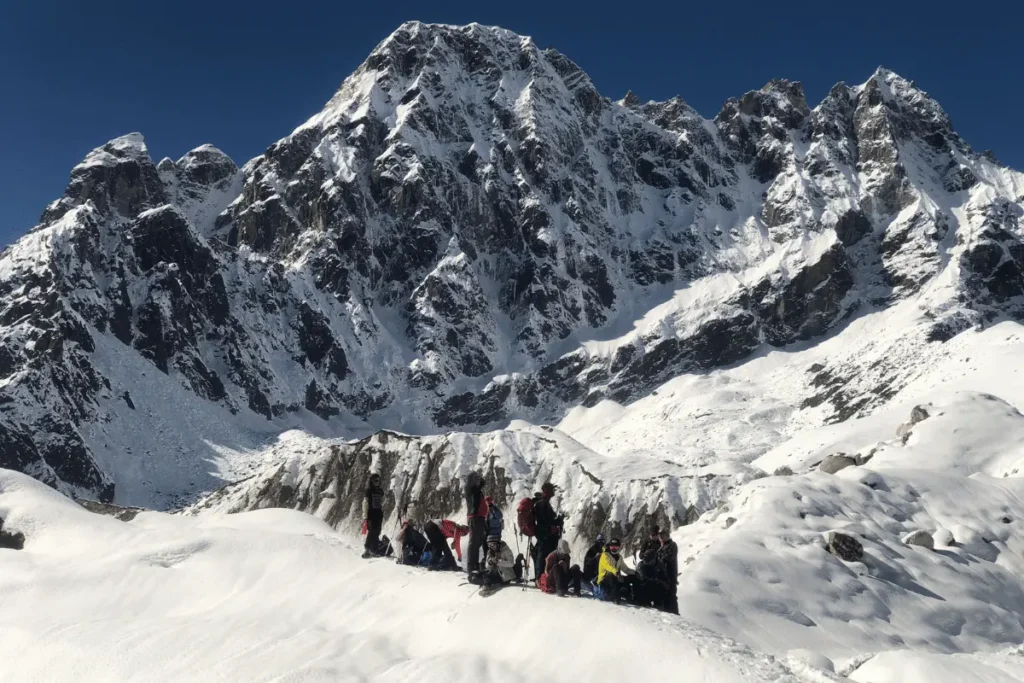
Nepal is the only country on earth where you can move a film crew from subtropical jungle at 150 metres to the base of the world’s highest peak at 5,364 metres, often within the same production week. For adventure film crews and expedition brands looking for locations that no studio budget can digitally replicate, that is not a minor detail. That is the entire point.
This guide is built on 18 years and 200+ international productions from Icefall Productions including a 2017 Emmy Award, screenings at Venice, Berlinale, MAMI, and Busan, and productions for BBC, National Geographic, Netflix, HBO, and Discovery. It covers every altitude zone in Nepal, what actually happens to your crew and equipment above 4,000 metres, how to plan a schedule the weather will not destroy, and what separates productions that succeed here from ones that do not.
What is High-Altitude Filmmaking in Nepal?
High altitude filmmaking in Nepal is any production conducted above 2,500 meters in the Himalayan region, where thinner air, temperature extremes, unpredictable weather, and reduced oxygen create both extraordinary visual conditions and serious operational challenges. Nepal is the global centre of this genre, it holds eight of the world’s fourteen peaks above 8000 meters, including Everest (8849m), and international permit applications for high-altitude locations grew 34% between 2022 and 2025 (Nepal Film Development Board,2025)
For adventure film crews and expedition brands, Npela offers something that Iceland, Patagonia, or the Alps cannot: the full vertical spectrum of the planet’s most dramatic landscape, inhabited by communities whose culture is inseparable from the mountain themselves.
Why Nepal Beats Ever Other High-Altitude Filming Destination
The Vertical Range is Unmatched Anywhere Else
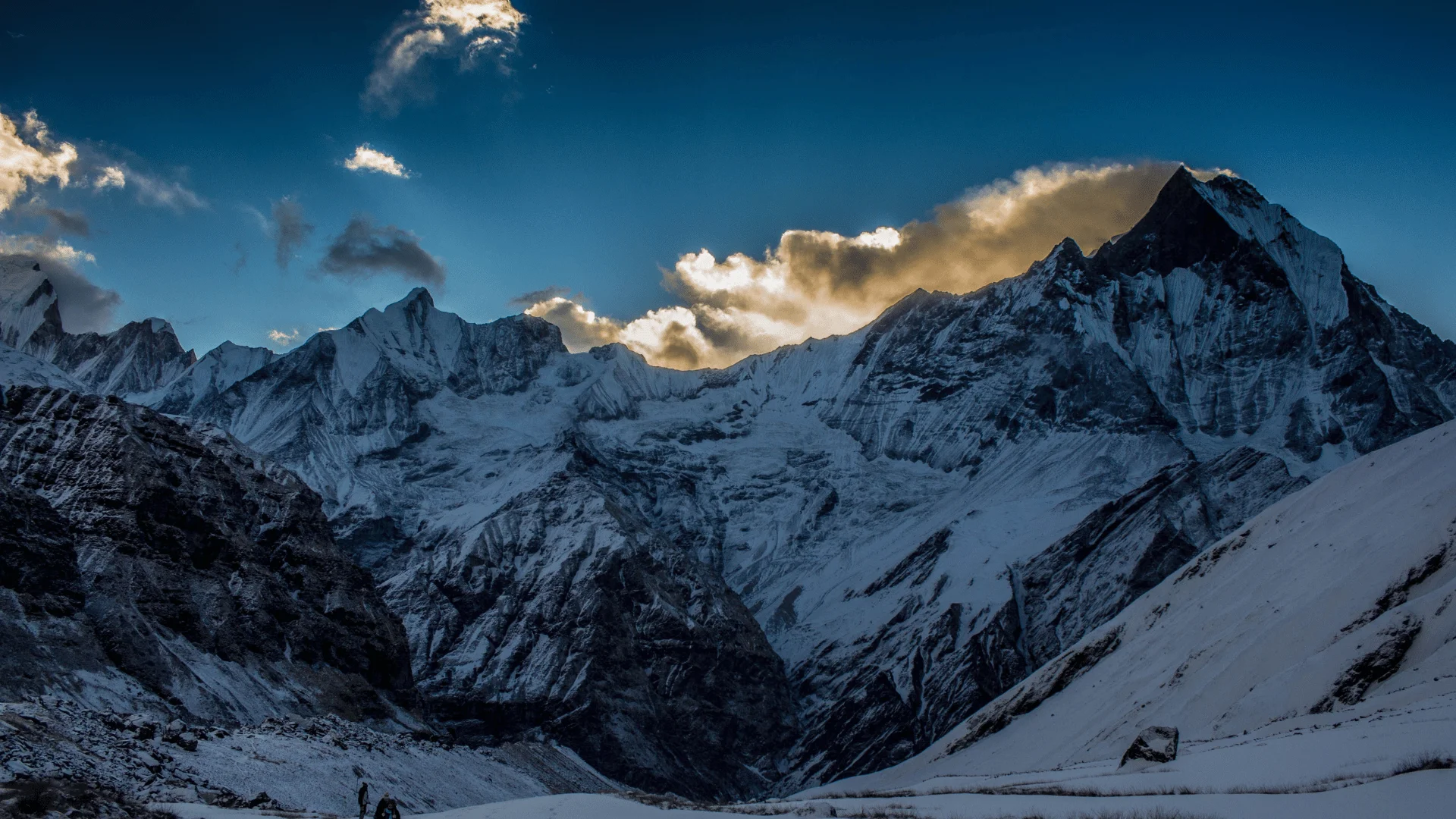
A single Nepal production can authentically capture four completely different worlds: the subtropical Terai jungle ( Chitwan, Bardia, Lumbini) at under 300 meters; the medieval temple valleys and terraced mid-hills (Kathmandu, Pokhara, Bandipur) at 800 to 2,500 meters; the Himalayan approach zones and glacial lakes ( Namche, Gokyo, Annapurna) at 2,500 to 4,000 metres; and the full high-alpine environment including Everest Base Camp at 4,000 to 5,500 meters.
Expedition Brands Get Access No Other Country Can Offer
The commercial potential for expedition and outdoor brands shooting in Nepal is structurally different from other markets. The Khumbu icefall at dawn, a Sherpa guide moving through altitude, a camp at 5,000 meters with Lhotse in the background, these are frames with instant global recognition that carry decades of emotional weight for outdoor audiences, Red Bull, The North Face, Mammut, and Patagonia have all produced content here for exactly this reason
The Cultural Layer That Changes Everything
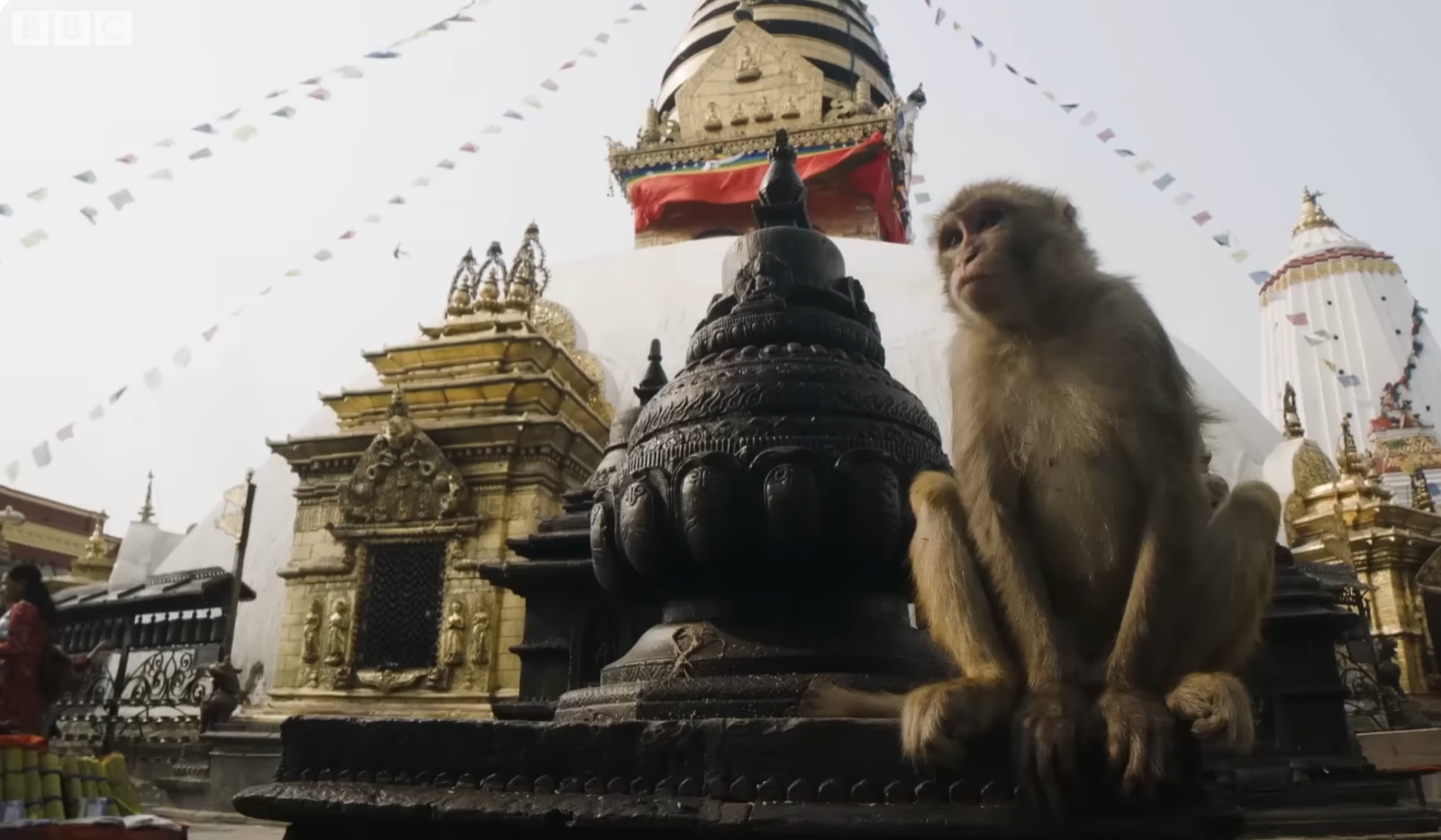
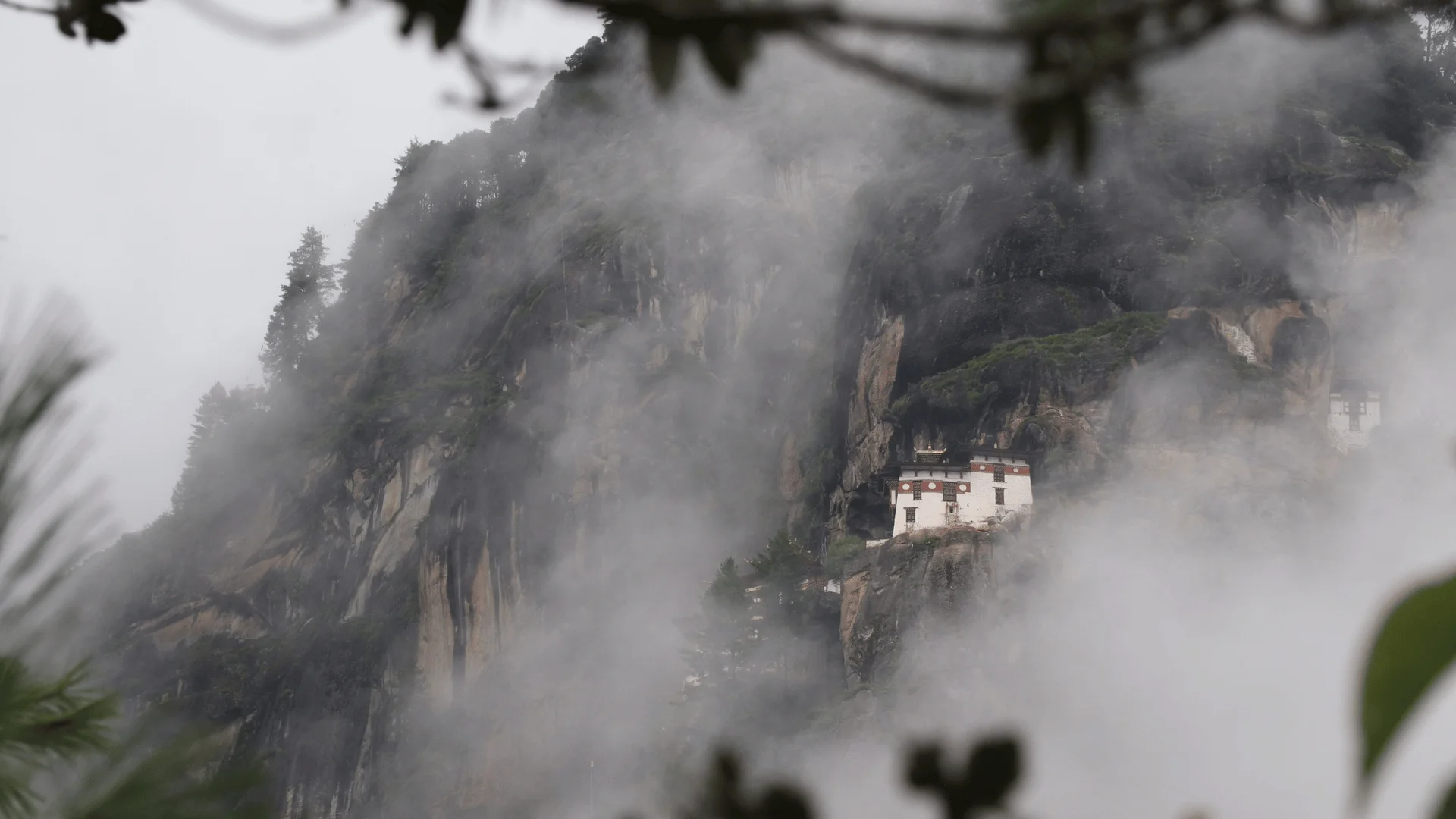
Nepal’s high altitude communities like Sherpa, Tamang, Gurung, Thakali have lived in direct relationship with these mountains for centuries. The Mani Rimdu festival performed at Tengboche Monastery (3,867m) with Ama Dablam rising behind the stage, the puja ceremony before a summit attempt, the prayer flags at Thorung La pass, these are not staged cultural performances. They are living traditions that exist nowhere else on earth at these elevations, and they are available to productions that approach communities with respect and proper preparation.
Nepal’s Five Filming Zones: A Practical Guide for Production Planning
Zone 1 Terai Lowlands (60m–300m)
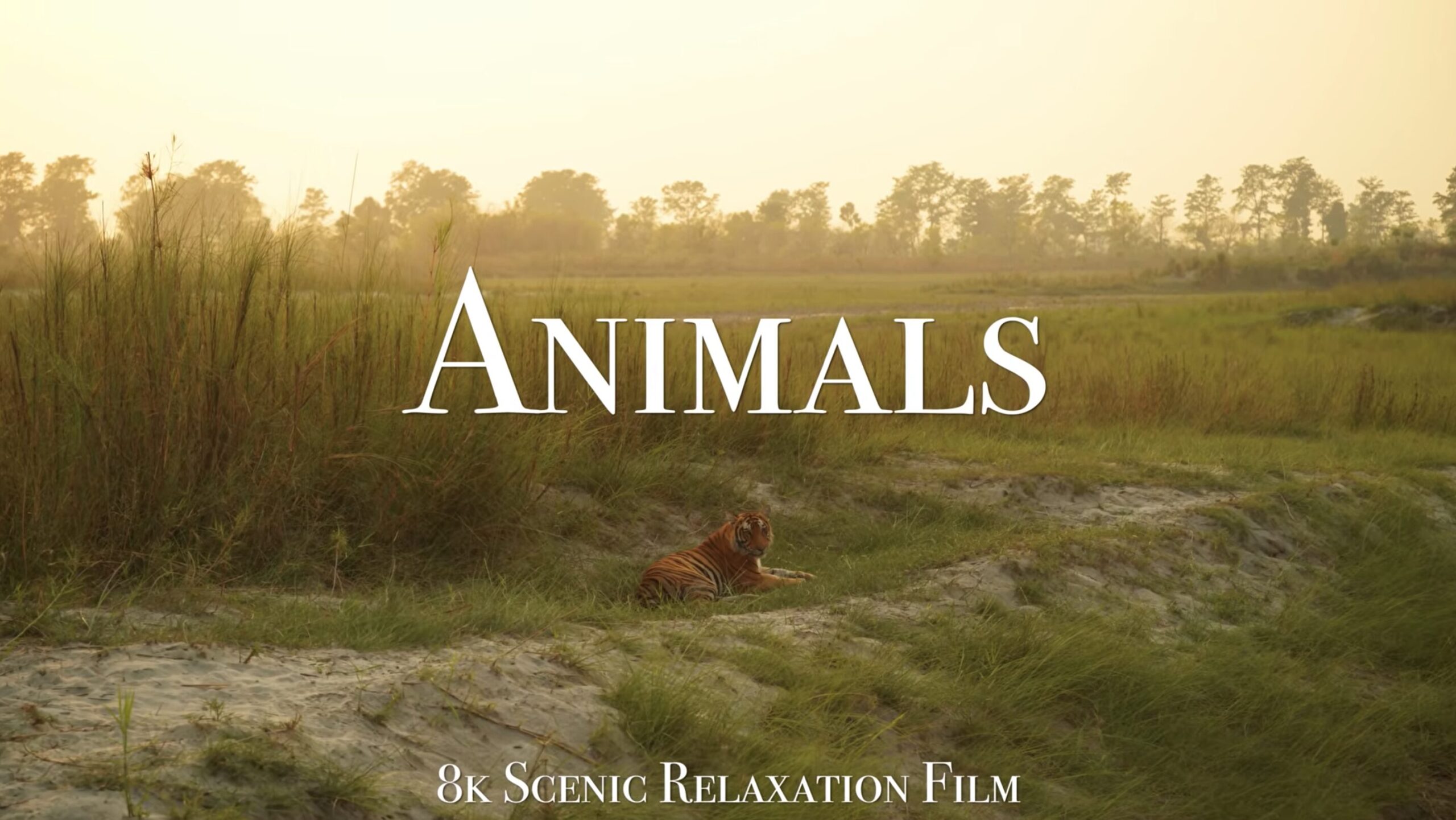
- Best for: Wildlife documentaries, jungle narratives, spiritual content (Lumbini, birthplace of the Buddha).
- Key locations: Chitwan National Park, Bardia National Park. No altitude concerns.
- Peak season: October to March. Permits: National Park filming permit + standard Ministry of Information and Communication (MoIC) permit. BBC Race Across the World used Terai segments in 2024.
Zone 2 Kathmandu Valley and Mid-Hills (800m–2,500m)
- Best for: Cultural documentaries, feature films, TVCs, branded content, corporate video.
- Key locations: Kathmandu (1,400m), Pokhara (820m), Bhaktapur, Bandipur, Nagarkot.
- No altitude concerns. Icefall’s Kathmandu base means same-day equipment dispatch and direct permit relationships with MoIC and the Department of Archaeology for UNESCO sites.
Zone 3 Himalayan Approach (2,500m-3,500m)
- Best for: Trekking documentaries, adventure reality, expedition lead-up content.
- Key locations: Namche Bazaar (3,440m), Langtang, Annapurna circuit, Helambu.
- Altitude sickness becomes a factor above 3,000m plan one acclimatisation day per 500 metres gained. Camera batteries begin losing capacity. Mobile networks become unreliable above 3,200m satellite communication required.
Zone 4 High Alpine (3,500m-5,500m)
- Best for: Expedition documentaries, extreme sports content, high-altitude branded shoots.
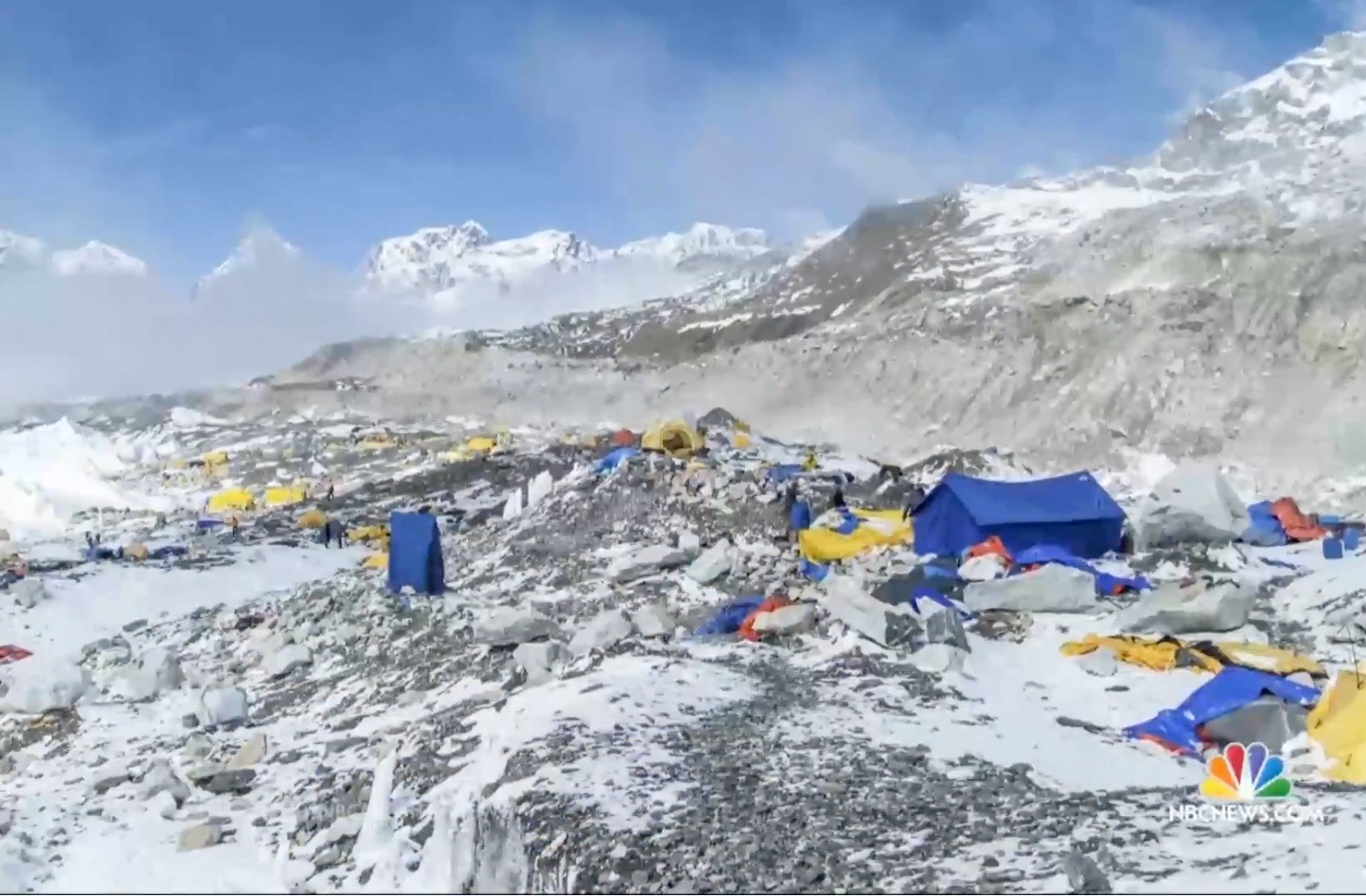
- Key locations: Everest Base Camp (5,364m), Gokyo Ri (5,357m), Kala Patthar (5,645m), Tilicho Lake (4,919m), Thorung La (5,416m). This is a serious altitude requiring a minimum two-week acclimatisation schedule.
- All Icefall productions above 4,500m include a certified Wilderness First Responder on crew and mandatory satellite communication.
- Dynamic range challenge: sunlit peaks against shadowed glaciers = 12 to 14 stops, ARRI ALEXA and Sony VENICE handle this; cameras with under 12 stops do not.
Zone 5 Extreme Altitude (5,500m-8,849m)
- Best for: Specialist summit documentation. Requires minimum six months of pre-production, dedicated mountaineering support, custom sealed equipment protocols, and helicopter evacuation insurance.
- Icefall has supported summit-approach documentation work, contact us at least six months before intended shooting.
The Logistics Reality of Filming in the Himalayas
The romantic image of filmmaking in the Himalayas often focuses on helicopters crossing snowy valleys, camera operators standing on ridgelines at sunrise, and dramatic summit shots captured against impossible light. The operational reality is far more complex.
Every kilogram matters at altitude. Above Lukla, much of the Khumbu region is accessible only on foot or by helicopter, meaning production logistics depend heavily on careful load planning. A cinema camera package that feels manageable in Kathmandu becomes a major logistical challenge once it must be carried for six days through steep mountain terrain.
International productions frequently underestimate how quickly weight multiplies. Camera bodies become lenses, lenses become batteries, batteries become charging systems, and charging systems require solar support or generator backup. Add winter clothing, medical kits, hard drives, satellite communication devices, drones, permits, and food logistics, and even small productions can suddenly require an extensive porter team.
This is why experienced Nepal production teams plan gear strategy differently from standard commercial shoots.
At Icefall Productions, high-altitude logistics planning starts during pre-production, not once the crew lands in Kathmandu. Every item is categorised by priority:
- Essential shooting equipment
- Emergency backup equipment
- Power systems
- Environmental protection gear
- Medical and rescue support
- Data storage and transfer systems
- Weather contingency supplies
This planning process becomes critical above 4,000 metres where replacing damaged or forgotten equipment may be impossible.
A failed memory card in Kathmandu is a minor inconvenience. A failed memory card at Everest Base Camp can end an entire production day.
Drone Filming in Nepal: What International Crews Need to Know
Drone cinematography has transformed Himalayan storytelling. Aerial movement through glacier valleys, monastery reveals at sunrise, and sweeping approach shots of expedition teams now define the visual language of modern adventure filmmaking.
However, Nepal’s drone regulations are significantly stricter than many international crews expect.
Drone use in Nepal generally requires:
- Civil Aviation Authority of Nepal (CAAN) approval
- Ministry-level filming permissions
- Local municipality or conservation area clearance in some regions
- Additional restrictions near airports, military zones, and heritage sites
In the Everest region specifically, weather becomes a larger challenge than regulation.
Strong valley winds can appear with little warning after 10 AM, particularly during spring climbing season. Battery performance drops sharply in freezing temperatures, and GPS instability may occur in steep mountain terrain where signal reflection affects positioning.
High altitude drone operations also require experienced pilots who understand mountain airflow patterns.
What appears visually calm from the ground may contain dangerous crosswinds above ridgelines. Many crashes occur because operators unfamiliar with Himalayan weather systems attempt aggressive aerial manoeuvres during unstable conditions.
For this reason, most professional productions in Nepal schedule drone operations during the earliest morning window when winds are typically most stable.
At Icefall Productions, drone filming plans are integrated into the broader mountain safety schedule rather than treated as a separate department.
Filming with Sherpa Communities: Respect, Access, and Trust
One of the most misunderstood aspects of high altitude filmmaking in Nepal is the role local communities play in the success of a production.
International crews often arrive focused entirely on landscapes. What they quickly discover is that access to the Himalayas is deeply connected to relationships with the people who live there.
Sherpa communities in the Khumbu region are not simply logistical support providers for mountaineering and filmmaking industries. They are custodians of cultural, spiritual, and environmental knowledge that directly shapes how productions function at altitude.
The difference between a production that merely passes through the mountains and one that creates meaningful work often comes down to how local communities are approached.
Experienced Nepal production teams understand several key principles:
Respect Religious Spaces
Many Himalayan monasteries, chortens, prayer walls, and sacred sites have filming restrictions or cultural expectations attached to them. Drone use, lighting placement, and even footwear can become sensitive issues depending on the location.
Advance communication with monastery leaders and local authorities is essential.
Understand Local Timing
Festivals, ceremonies, and agricultural schedules affect access and community availability. Productions that ignore these realities often face unnecessary delays.
Hire Local Expertise
Local guides and coordinators are not only translators. They are operational bridges between international crews and mountain communities.
They help productions navigate:
- Cultural etiquette
- Local negotiation
- Environmental sensitivity
- Route conditions
- Safety concerns
- Weather interpretation
This knowledge cannot be replaced by internet research.
The strongest productions in Nepal are collaborative rather than extractive. Crews that build trust often gain access to moments, locations, and stories that are unavailable to productions operating purely transactionally.
What Altitude Actually Does to Your Equipment
This is the section most pre-production meetings skip, and it is where productions get into trouble.
Batteries discharge 30 to 45 percent faster above 4,500 metres because thinner air means less efficient thermal management inside the battery cell. What lasts a full shooting day at sea level lasts half a day at Everest Base Camp. The fix is straightforward: bring three times the batteries you think you need and keep them warm overnight, inside a sleeping bag if necessary. Productions that do not believe this stat learn it the hard way on their first Himalayan dawn shoot.
Temperature cycling is the second killer. Going from -15°C overnight to a warm teahouse produces condensation inside lens elements, a fogged lens at 5,000 metres is not a morning problem, it is a lost shooting day. Allow 30 minutes of temperature equalisation in a vestibule before bringing cold equipment into warm spaces.
Dynamic range is the third challenge. Snow-covered peaks against deep blue sky at altitude can exceed 14 stops of contrast genuinely at the outer edge of what cinema sensors handle. Above the snowline, you will need ND filtration even on overcast days because snow reflects 80 to 90 percent of incident light. We shoot on ARRI ALEXA Mini LF and Sony VENICE 2 for productions where latitude is critical. Both are available from our Kathmandu rental inventory.
High Altitude Sound Recording Challenges
Most discussions around Himalayan filmmaking focus on visuals, but sound departments often face the most difficult technical conditions.
Wind is the primary challenge.
At altitude, even moderate mountain airflow can destroy dialogue recording if productions are not properly equipped. Standard wind protection systems that function perfectly in urban environments may become ineffective above exposed ridgelines.
Cold temperatures also affect:
- Wireless transmission stability
- Battery duration
- Condenser microphone sensitivity
- Recorder screen functionality
Silence behaves differently in the Himalayas as well.
The absence of urban noise creates extraordinary natural ambience, but it also exposes small technical flaws more clearly. Clothing movement, boot crunch, oxygen breathing, and trekking poles can dominate recordings in ways crews may not expect.
For documentary productions, these details often become part of the emotional authenticity of the environment.
Capturing clean natural sound at altitude requires patience, environmental awareness, and highly adaptive field techniques.
Data Management in Remote Himalayan Environments
Data security becomes significantly more complicated once productions move beyond Kathmandu.
At altitude, environmental conditions place unusual stress on digital workflows.
Hard drives may freeze overnight. Solar charging systems may fail during storm conditions. Internet infrastructure becomes inconsistent or disappears entirely. Dust, snow, and moisture create continuous threats to storage systems.
Professional productions operating in Nepal typically adopt a “triple redundancy” approach:
- Primary storage drive
- Secondary backup drive
- Separate physically isolated backup system
For expedition productions, one copy is often sent back to Kathmandu before the shoot concludes.
This prevents catastrophic loss in the event of weather damage, transport accidents, or equipment failure.
Data transfer expectations must also change.
Uploading high resolution dailies from Everest Base Camp is possible through specialised satellite systems, but bandwidth is limited and expensive. Productions planning remote review workflows should budget accordingly.
For broadcasters and streaming productions, this becomes especially important because remote stakeholders increasingly expect near-real-time access to footage.
Icefall Productions supports:
- Field data wrangling
- DIT workflows
- Satellite-assisted transfer systems
- Remote dailies management
- Cloud-integrated backup planning
for productions operating in extreme environments.
Weather Windows: The One Variable You Cannot Plan Around
- Every experienced Himalayan filmmaker will tell you the same thing like building contingency days in, and then build more. The mountain does not negotiate with broadcast schedules.
- Post-monsoon autumn (October to November) is the premier high altitude filming season: clearest skies of the year, fresh snowfall on the peaks, autumn colours on the approach routes.
- Pre-monsoon spring (March to May) is the second window and coincides with the Everest climbing season, bringing human drama and complexity to Khumbu.
- Winter (December to February) works for mid-hills and Kathmandu but is demanding above 4,000m.
- Monsoon (June to August) is avoided above Zone 2 for most technical production, though the landscape value in the Terai is significant.
What no satellite weather app tells you is what the mountain will do in the next two hours. That knowledge belongs to our Sherpa guides, who have been reading these environments their entire lives. It is the most valuable weather intelligence available on any high altitude production.
Safety Protocols: What We Do and Why It Matters
According to the Himalayan Rescue Association, approximately 15 percent of people who ascend above 5,000 metres experience some degree of altitude sickness. For production crews working under physical load and creative pressure, the number is higher. At Icefall, safety is not a checklist, it is the foundation that makes ambitious work possible.
On all productions above 4,000 metres, we deploy a certified Wilderness First Responder as part of the crew, portable hyperbaric chambers (Gamow bags) at Base Camp level, satellite communication equipment (Garmin inReach plus Iridium satellite phone backup), and mandatory helicopter evacuation insurance. Every shooting day starts with a go/no-go assessment covering weather and crew health. No deadline overrides that assessment.
Helicopter evacuation partners can reach most high altitude locations within two to four hours. Having that capacity changes the confidence with which a crew can work.
How to Plan a High Altitude Nepal Production: Timeline by Zone
- Zone 2 and below (Kathmandu Valley, mid-hills): 6 to 8 weeks lead time. A standard MoIC permit takes 10 to 15 working days. No acclimatisation planning required.
- Zone 3 (up to 3,500m): 8 to 10 weeks. Add permit time for Sagarmatha or other national parks if applicable. Basic altitude protocol in schedule.
- Zone 4: Everest Base Camp region (up to 5,500m): 12 to 16 weeks minimum. Permit processing, crew health assessments, full acclimatisation schedule built into shooting plan.
- Zone 5: Summit approaches: 6 months minimum. Full expedition-level planning with a dedicated mountaineering production partner.
Frequently Asked Questions: High Altitude Filmmaking in Nepal
What is high-altitude filmmaking in Nepal?
High-altitude filmmaking in Nepal means producing film, documentary, or branded content above 2,500 metres in the Himalayan region where thinner air, extreme temperature variation, and unpredictable weather create exceptional visual conditions alongside real operational challenges. Nepal leads the world in this genre because it holds more 8,000-metre peaks than any other country and offers a complete spectrum of altitude zones, from jungle lowlands to Everest Base Camp, under one permit framework.
Can an international film crew film at Everest Base Camp without mountaineering experience?
Yes. Everest Base Camp at 5,364 metres does not require technical climbing skills. The trek from Lukla takes 10 to 14 days with a proper acclimatisation schedule and is achievable for physically fit crew members. Icefall Productions provides full support including Sherpa crew, porter teams, tented camp logistics, satellite communication, and on-site medical cover.
How much does a high-altitude Nepal production cost?
A five-person international crew trekking to Everest Base Camp, filming for three days, with 10 days in-country including acclimatisation, should budget $35,000 to $65,000 USD for Nepal-side costs. This covers permits, Icefall production coordination, local crew, equipment rental, Kathmandu-Lukla flights, trek accommodation, and Kathmandu hotel. Helicopter support, if required, adds $1,200 to $2,500 USD per hour.
What is the best season for adventure filmmaking in Nepal?
October to November (post-monsoon) is the premier season for high-altitude adventure production with the clearest skies of the year, fresh snow on the peaks, and outstanding light quality on the approach routes. March to May (pre-monsoon) is the second choice and coincides with the Everest spring climbing season, which brings significant human drama to Khumbu productions.
Does Icefall Productions offer remote shoot coordination for adventure brands?
Yes. Our Remote Shoot division provides full on-the-ground production coordination for international adventure brands and broadcasters local crew, equipment from our Kathmandu inventory, end-to-end permit handling, live-streaming capability from Base Camp, and dailies management.
Work With Icefall Productions
Icefall Productions has 18 years of experience building relationships, infrastructure, and proven expertise to deliver high-altitude productions to international broadcast standards. We know the mountain, we know the communities, and we know what it takes to bring back footage that no other location on earth can give you.
Whether you are an adventure film crew planning an expedition documentary, an outdoor brand shooting your next campaign at altitude, or a broadcaster looking for a proven production partner in Nepal, get in touch.