

Every producer who plans a Himalayan shoot eventually hits the same wall. The creative is brilliant, the locations are confirmed, and then someone asks a simple question: how do we actually get fourteen cases of equipment to Lukla?
In most countries, moving gear is a line in the budget. In Nepal, it can decide whether you shoot at all. Mountain airstrips have tight weight limits, flights depend on the weather, and the final stretch to many locations is on foot. This guide explains how domestic flights work, what to expect at Lukla, and how film crews move equipment efficiently without losing days to delays.
It works alongside our wider guides on filming logistics in Nepal and high altitude filmmaking, which cover how altitude and scheduling shape the whole shoot.
Why Domestic Flights Matter So Much in Nepal
Nepal’s geography is steep and its roads are slow. A trip that looks short on a map can take a full day by road, and many Himalayan regions have no road access at all. Small domestic aircraft therefore connect Kathmandu and Pokhara to mountain airstrips such as Lukla, Jomsom, Phaplu, Dolpo and Simikot.
Those aircraft are small. Weight is a safety issue, not an inconvenience, which is why baggage rules on mountain routes are strict and enforced. For a film crew, that single fact shapes everything from how you pack to how many people you bring.
Lukla and Tenzing-Hillary Airport: What Crews Should Know
Lukla’s Tenzing-Hillary Airport is the gateway to the Everest region and the starting point for most crews heading to Everest Base Camp. According to Wikipedia’s summary of the airport, daily flights connect Lukla with Ramechhap or Kathmandu during daylight hours in good weather, and conditions can differ sharply between the two ends, with rain in Lukla while the sun shines in the departure city. The runway is short, sits at about 2,845 metres, and has a long reputation as one of the world’s most demanding airports.
What that means for a production:
- Flights depend on visibility. Mountain flights operate under visual flight rules, so pilots need to see the terrain. Cloud, fog and wind can ground aircraft for hours or days.
- Mornings are the best window. Weather usually deteriorates later in the day, so airlines push as many flights as possible into the early hours.
- Delays are normal. Treat a Lukla flight as a plan, not a guarantee, and build buffer days into the schedule on both the outbound and return legs.
- Return flights matter as much as outbound ones. Missing a connecting international flight because Lukla is closed is a classic production nightmare.
Kathmandu or Ramechhap? The Peak-Season Twist
In the busiest trekking seasons, most Lukla flights operate from Manthali Airport in Ramechhap rather than Kathmandu. Local operators explain that Kathmandu’s single runway is shared by international and domestic traffic, and moving Lukla flights to Ramechhap eases congestion and gives access to a better morning weather window.
The practical impact is large:
- A long, early drive. Guides report that the drive from Kathmandu to Manthali takes roughly four to six hours, often starting around 1 am to 2 am so crews arrive for first flights.
- Limited facilities. Manthali is a small airport, and bags not flying with you need to be left behind in Kathmandu beforehand.
- Shorter flights. The flight itself from Ramechhap is shorter than from Kathmandu, which lets airlines fit in more departures.
Which airport your flights use depends on the season and Civil Aviation Authority of Nepal (CAAN) decisions, so confirm the current arrangement with your partner and airline before you finalise the schedule. You can check announcements from the Civil Aviation Authority of Nepal.
Baggage Limits: The Number That Shapes Your Kit List
Most operators and guides report the same standard allowance on Lukla flights: 10 kg of checked baggage plus 5 kg of hand baggage per passenger, for 15 kg in total. Excess baggage is charged per kilogram, or refused outright if the aircraft is near its weight limit that day. Airlines can change allowances and fares, so always confirm the current rules at the time of booking.
Here is why that matters for a film crew. Take a six-person team:
- 6 people x 10 kg checked = 60 kg
- 6 people x 5 kg hand baggage = 30 kg
- Total personal allowance = about 90 kg
Subtract the crew’s own clothing, sleeping gear and personal items, and very little remains for cameras, lenses, tripods, audio, monitors, batteries and drives. A modest cinema package in hard cases can easily exceed what the whole crew is allowed to carry, which is why equipment planning has to start long before arrival.
Five Ways to Move Equipment to the Mountains
1. Carry it as passenger baggage. Spread critical items, such as camera bodies, lenses and drives, across the whole crew’s hand luggage. This works for lean documentary kits, not for large packages.
2. Buy additional capacity. Airlines often have cargo space or allow extra weight when aircraft loads permit. Ask your local partner to negotiate excess baggage or cargo in advance, rather than at the check-in counter.
3. Send gear by cargo or ground transport ahead of the crew. Equipment can sometimes be sent in advance on cargo flights or by road to a staging point. This requires careful planning, tracking and insurance.
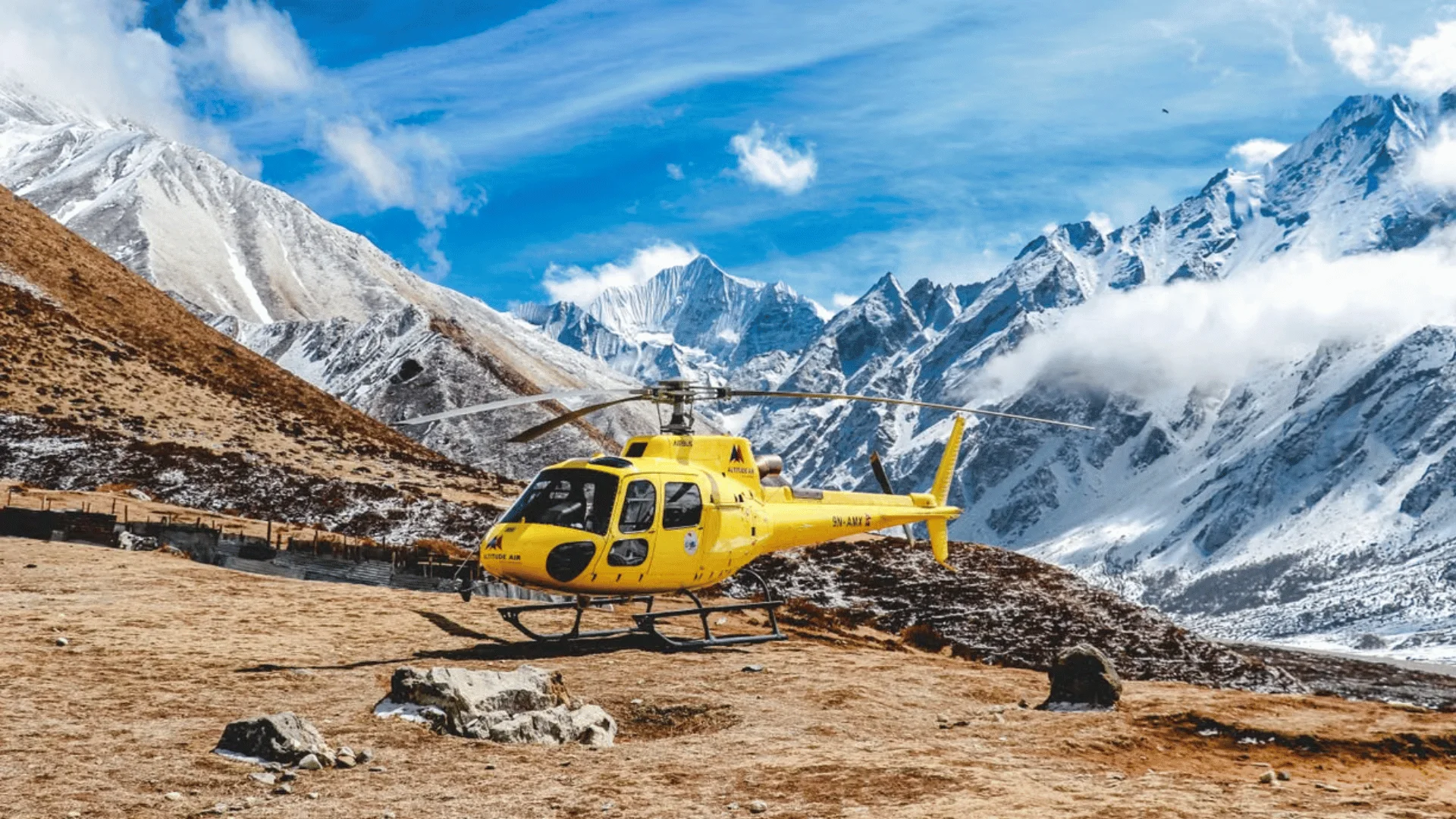
4. Charter a flight or helicopter. Helicopters bypass weight limits to a degree, avoid the Ramechhap drive and can carry crew and equipment directly to remote locations. They are expensive and weather-dependent, but sometimes they are the only realistic way to hit a schedule. Our guide on filming at Everest Base Camp explains how helicopter logistics fit into a high-altitude shoot.
5. Use porters and pack animals for the final stretch. Beyond the airstrip, most gear travels on people’s backs or on yaks and zopkyo. Loads are weighed and paid per porter, so every extra kilo has a cost.
Most productions combine several of these. The right mix depends on how much kit you need, how remote the location is and how much schedule risk you can tolerate.
Pack Smart: Gear Tips for Mountain Flights
- Choose soft, durable cases over heavy hard cases where the equipment allows. Case weight counts against your limit.
- Weigh every bag before you travel, and weigh again after repacking in Kathmandu.
- Split critical items across several bags, so one lost or delayed bag does not stop the shoot.
- Carry irreplaceable items, such as camera bodies, cards and drives, in hand luggage.
- Label everything clearly with production name, contact numbers and case numbers, and keep a master list with serial numbers.
- Protect against shocks, dust and moisture. Gear moves by plane, truck, porter and yak, and each step adds risk.
- Check battery rules. Spare lithium batteries have size limits, and large power stations often cannot fly as passenger baggage. See the IATA lithium battery guidance and our notes on on-site gear support for what to rent locally instead.
If you are bringing equipment into Nepal from abroad, the customs process comes first. Our customs clearance guide explains the paperwork, and our cinema camera rental page shows what you can rent in Kathmandu instead of carrying it across the world.
Beyond Lukla: Other Domestic Routes for Film Crews
Lukla is the most famous airstrip, but not the only one. Domestic flights also serve:
- Pokhara, the base for Annapurna region shoots.
- Jomsom, the gateway to Mustang and the Thorong La area.
- Phaplu and other Solukhumbu airstrips, used as alternative starting points to the Everest region.
- Dolpo, Simikot, Jumla and Rara, serving the remote west of the country.
Each route has its own weather patterns, schedules and baggage practices. Some airstrips operate only in the morning, and some have very limited seat availability, so booking early matters. Because several western airstrips serve restricted areas, your film permits and location approvals need to line up with your flight dates too.
Building a Flight-Proof Schedule
A realistic schedule treats mountain flights as a risk to manage.
- Add buffer days at both ends of the mountain leg, especially the return.
- Do not schedule key shoots on arrival day. A delayed flight, an altitude headache or a lost bag can ruin a hero scene.
- Avoid tight international connections. Allow at least one or two spare days before any long-haul flight home.
- Have a plan B. Agree in advance whether you will wait, switch airports, charter a helicopter or adjust the shot list.
- Keep your fixer in the loop. Local partners can rebook seats, arrange alternate transport and speak to airlines faster than anyone abroad.
Insurance should match the risk. Our guide to film insurance and liaison officer requirements explains what to check, including equipment cover during transit and travel disruption.
Common Transport Mistakes
- Assuming the Lukla flight is a certainty.
- Planning a shoot around 15 kg per person without checking what the equipment actually weighs.
- Forgetting the early-morning Ramechhap drive and the sleep it costs your crew.
- Leaving irreplaceable items in checked baggage.
- Booking flights before permits, liaison officers and accommodation are confirmed.
- Underestimating the cost and weight of batteries, lighting stands and cases.
- Having no backup plan for weather.
Quick Checklist for Gear Transport
- Confirm which airport and airline each flight uses for your season.
- Verify current baggage allowances and excess charges.
- Weigh and list every case and item.
- Decide what to rent locally and what to import.
- Split critical kit across bags and crew members.
- Arrange cargo, charter or porters for anything that exceeds limits.
- Build buffer days and a weather plan B.
- Check insurance for transit and delays.
- Share the full plan with your local partner.
Frequently Asked Questions
What is the baggage limit on Lukla flights?
Most operators report 10 kg checked plus 5 kg hand baggage per passenger, strictly enforced. Confirm the current allowance when you book.
Do Lukla flights leave from Kathmandu or Ramechhap?
In peak trekking seasons, most flights operate from Manthali Airport in Ramechhap, a four to six hour drive from Kathmandu. Outside peak months, flights may leave from Kathmandu. Check the current arrangement before you plan.
How can a film crew carry heavy equipment to Lukla?
Spread kit across crew baggage, arrange extra cargo capacity, send gear ahead, or charter a helicopter for larger packages. Most productions use a mix of these.
What happens if the flight is cancelled?
Flights are rescheduled when weather clears, which can take hours or days. Build buffer days into your schedule and agree a backup plan with your local partner.
Can we fly drones or large batteries as baggage?
Batteries have airline limits, and large power stations often cannot travel as passenger baggage. Drones also need separate permits. Check both before packing.
Plan Your Nepal Gear Logistics With Icefall Productions
Good logistics stay invisible on screen. Icefall Productions has supported international crews in Nepal since 2008, from Kathmandu city shoots to Himalayan expeditions, and we plan flights, cargo and permits as one connected schedule. Explore our film fixer services, or contact our team with your equipment list, locations and dates, and we will build a transport plan that fits the mountains.