

Rain is not, in itself, a reason to cancel a production.
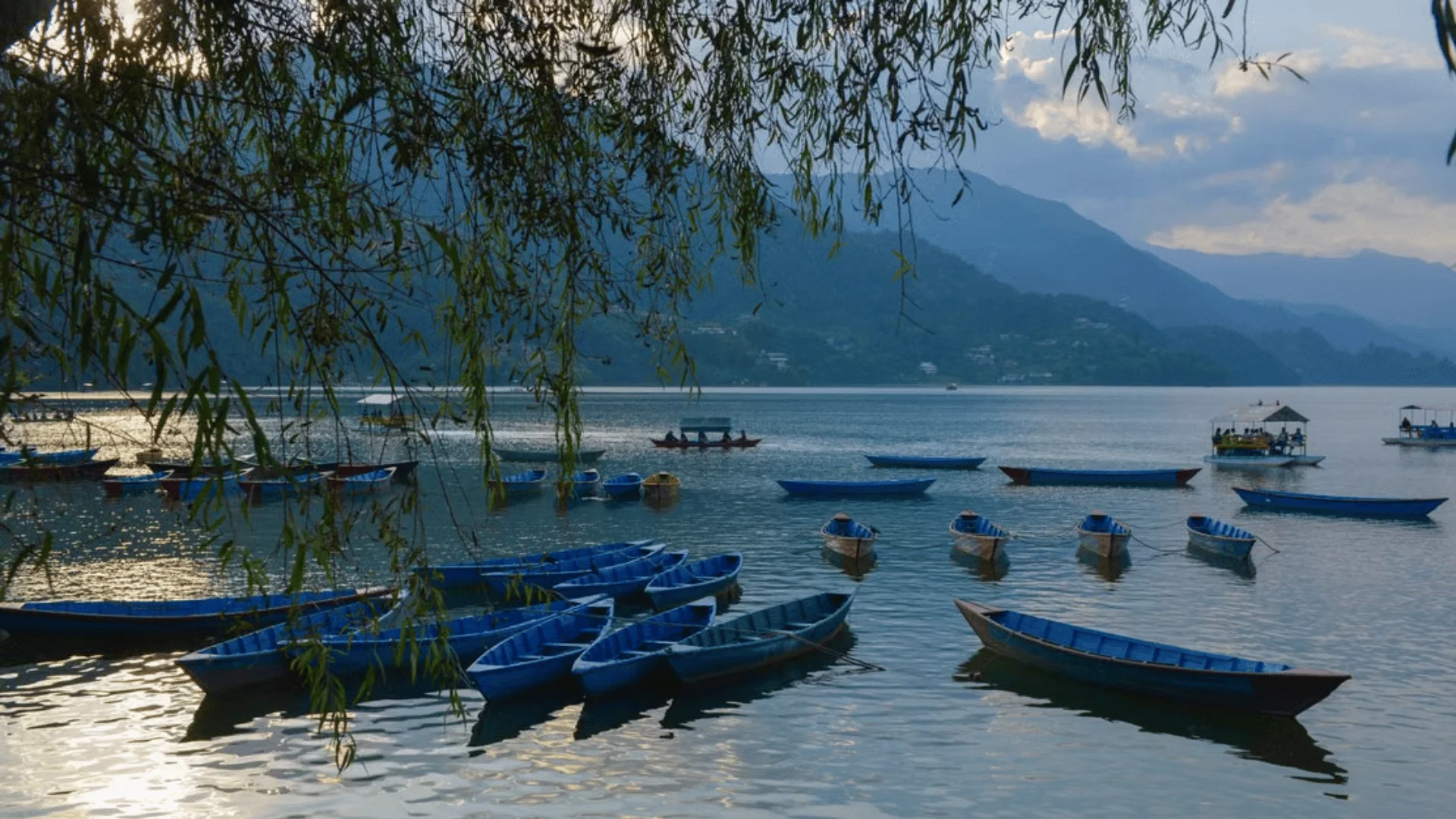
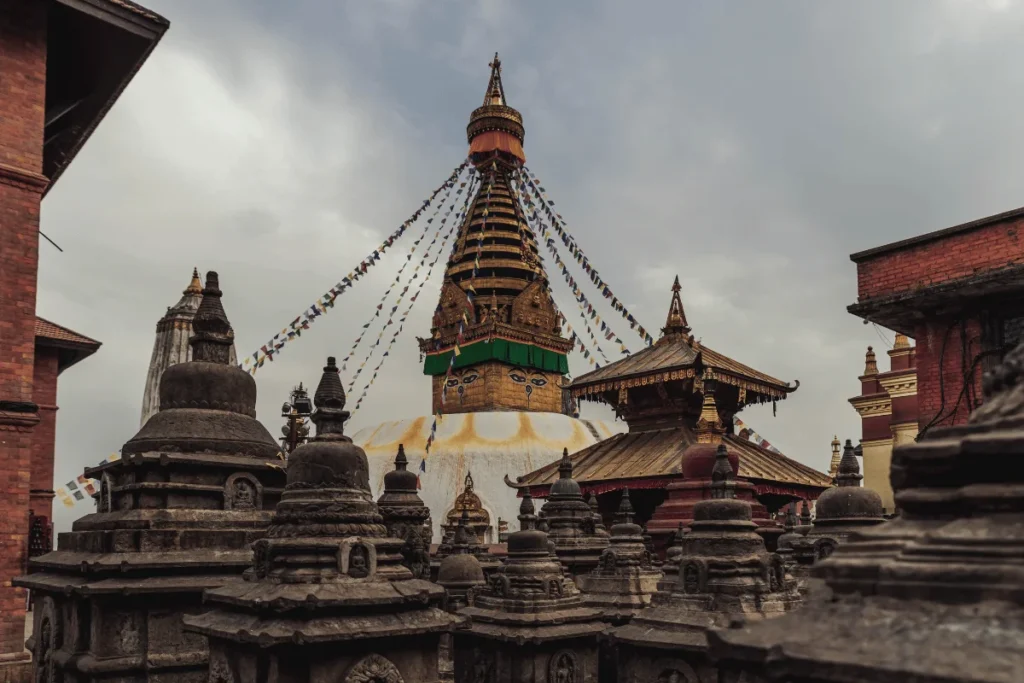
Monsoon filming in Nepal can fundamentally change how a production looks, feels, and operates. Hillsides turn a deep, saturated green, cloud formations move through mountain valleys, and city streets take on a different quality of light. For many international productions, these are conditions the dry season simply cannot replicate.
At the same time,Monsoon filming in Nepal during introduces operational considerations that require careful planning. Road conditions can change with little warning, travel times can extend significantly, and domestic flights may be delayed. Outdoor locations can become temporarily inaccessible, and equipment requires additional protection from moisture.
For an international production evaluating filming in Nepal’s rainy season, the relevant question is not whether filming is possible, but how the production should be structured to accommodate it. With appropriate preparation, an experienced local Nepali crew, and a reliable production partner on the ground, monsoon filming is entirely achievable and can yield some of the most visually distinctive footage Nepal has to offer.
When Is Monsoon Season in Nepal?
Nepal’s monsoon season generally extends from June through September, accounting for the majority of the country’s annual rainfall.
However, international producers should understand that there is no single, uniform “Nepal monsoon experience.” Rainfall intensity and weather patterns vary considerably by geography and altitude. Kathmandu Valley, Pokhara, the southern Terai plains, the mid-hill regions, and the Himalayan rain-shadow zones can each experience markedly different conditions during the same period. Nepal’s Department of Hydrology and Meteorology publishes regional forecasts that reflect just how much this variation matters for planning purposes.
For this reason, production decisions should not be based on the general label “monsoon season” alone. The specific filming location, elevation, accessibility, creative requirements, and shooting schedule must all be assessed individually. A local Nepal film production team can evaluate these factors in advance, before an international crew commits to a fixed schedule.
Is It Possible to Film in Nepal During the Monsoon?
Yes. Monsoon filming in Nepal is a viable and, in many cases, creatively advantageous option for international productions.
Successful execution, however, requires a different planning approach than a standard dry-season shoot. Rather than assuming a fixed schedule will proceed without disruption, productions should build flexibility into pre-production from the outset. This means extending shooting windows, identifying backup locations, allowing additional travel time, monitoring weather continuously, and preparing alternative scenes that can be filmed if outdoor conditions change. The objective is not to prepare for failure, but to ensure that a single weather event does not compromise the entire production timeline.
The Primary Risk Is Not the Rain Itself
Rainfall is rarely the central production risk. The more significant concern is what rainfall affects downstream, namely roads, access, transportation, visibility, and site conditions. For productions operating outside major urban centres, these secondary effects often carry greater operational risk than the rain itself.
Roads and Travel Times
Travel times across Nepal vary considerably depending on terrain and road quality. A route that appears straightforward on a map does not necessarily reflect a realistic production timeline. During monsoon conditions, productions should allow additional travel time and avoid scheduling based on optimistic or tourist-oriented estimates. Nepal’s Department of Roads maintains updates on highway conditions that can help inform realistic travel planning, though local route knowledge from an experienced production logistics Nepal partner remains equally valuable in this context.
Landslides and Site Access
Mountainous terrain requires particular attention during periods of sustained rainfall. A location confirmed as accessible during a scouting trip may become difficult or impossible to reach later in the schedule. Nepal’s National Disaster Risk Reduction and Management Authority monitors landslide and flood risk across the country, and productions working in hill or mountain districts should factor this risk into their planning. Location planning should therefore address not only “Is this location accessible?” but also “Will this location remain reliably accessible if conditions change?”
Domestic Flights
Productions travelling between Kathmandu and other regions of Nepal should account for the possibility of weather-related flight disruption. Where a specific crew member, equipment package, or talent must reach a remote location on a fixed date, the schedule should include sufficient contingency to absorb potential delays.
Equipment Protection
Cameras, lenses, sound equipment, lighting rigs, and media storage are all vulnerable to moisture. Protecting equipment from rain is a fundamental component of any monsoon production plan, not an incidental consideration.
Why Local Nepali Crew Are Particularly Valuable During Monsoon
Experienced local Nepali crew provide a level of situational insight that weather forecasting alone cannot replicate. A forecast can indicate that rain is expected; a local production professional can assess what that rainfall is likely to mean for a specific route, location, or shoot day. This includes knowing which roads remain reliable, which routes tend to become impassable, where practical alternative locations exist, and which areas are likely to clear more quickly once the rain passes.
For an international production, this local expertise represents more than an additional crew member. It constitutes a working understanding of the environment in which the production is operating, built from experience rather than forecasting data alone.
Establishing Contingency Locations in Pre-Production
A structured approach to location contingency planning significantly reduces monsoon-related risk. For each significant outdoor scene, productions should identify a primary location, a nearby alternative, and a fully interior or controlled option:
| Contingency | Description |
|---|---|
| Plan A | Primary location |
| Plan B | Alternative location in reasonable proximity |
| Plan C | Interior or fully controlled location |
This structure does not assume Plan A will fail. It exists to prevent the loss of an entire shooting day if conditions change unexpectedly. An experienced film fixer in Nepal can assist in identifying alternatives that are logistically and geographically viable, rather than locations selected on visual appeal alone.
The Creative Case for Monsoon Filming
Monsoon conditions are frequently discussed in purely logistical terms, which understates their creative value. Rainfall can visually transform Nepal, producing mist that moves through hillside terrain, dramatic and layered cloud formations, deeply saturated green landscapes, and reflections across wet roads and streets. The resulting atmosphere often carries a distinct sense of depth and movement that dry-season light cannot reproduce.
For documentaries, commercials, travel content, branded productions, and narrative filmmaking, these conditions frequently become part of the visual narrative rather than an obstacle to it.
Regional Variation: Not All of Nepal Receives the Same Rainfall
Location selection is particularly important during monsoon planning. Productions requiring consistently clear mountain visibility should assess the seasonal weather patterns of the specific region under consideration, rather than relying on generalised assumptions about Nepal’s monsoon.
Conversely, productions requiring lush landscapes, atmospheric skies, or wet urban surfaces may find that monsoon conditions directly support the creative brief. Certain Himalayan regions also sit within rain-shadow zones and experience considerably lower rainfall than areas farther south. The Nepal Tourism Board publishes regional travel information that can offer a useful starting point when narrowing down candidate regions before a formal scout.
For this reason, location scouting for filming locations in Nepal should not rely solely on photographs or general travel resources. The production team should evaluate creative objectives alongside weather patterns, site access, infrastructure, and broader logistical considerations.
Equipment Considerations for a Monsoon Production
Productions operating in wet conditions should expand their standard equipment list to include rain covers and waterproof bags for cameras, protective cases, tarps and portable shelters, lens cloths, moisture-control materials, additional batteries, and waterproof storage for recorded media. Weather-appropriate crew clothing, suitable footwear, and weather-resistant production paperwork are equally worth accounting for.
Equipment protection should extend to transportation and storage as well. Moving equipment from a cool, wet environment into a heavily air-conditioned vehicle or interior space can introduce condensation-related issues, so crews should follow a defined equipment-handling procedure to mitigate this risk.
Power and Charging Infrastructure
Remote filming locations can present independent challenges around power supply, separate from weather conditions. International productions should confirm power requirements with their local production partner well in advance of travel, including provisions for generators, backup power sources, structured charging schedules, and adequate battery inventory. A local production partner is best positioned to assess what is realistic for a given location, rather than assuming studio-level infrastructure will be available on site.
Building Schedule Flexibility
A common and avoidable error in monsoon production planning is a schedule with no built-in flexibility. Where a remote location requires significant travel time, scheduling a critical scene without contingency introduces unnecessary risk to the entire production.
Productions should instead incorporate weather holds, additional travel time allowances, flexible shooting windows, pre-approved backup scenes, and contingency days built around priority locations. Flexibility introduced during pre-production materially reduces operational pressure once filming begins.
Drone Filming During Nepal’s Monsoon
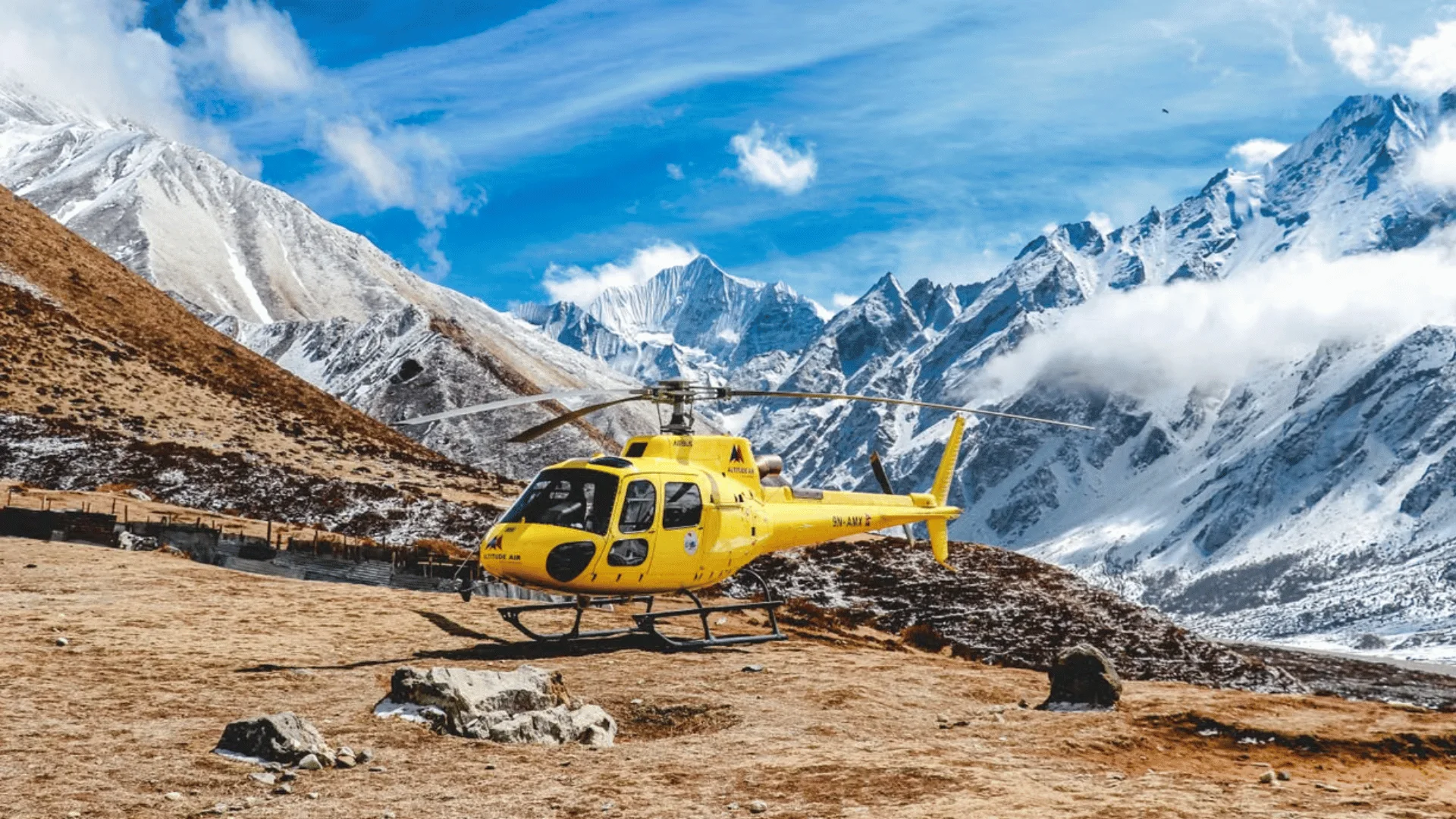
Aerial cinematography can be exceptionally effective in Nepal during monsoon, with cloud movement, mist, and shifting light conditions offering distinctive visual opportunities.
Drone operations, however, require additional pre-production planning. Weather conditions, visibility, wind, airspace restrictions, and aviation regulations must all be assessed prior to any flight, and international productions should confirm that the necessary permits and clearances are secured well in advance of the shoot date. The Civil Aviation Authority of Nepal sets the registration and flight requirements that apply to all drone operations in the country. Drone filming should not be treated as a same-day decision; requirements should be established during pre-production, with confirmation that the intended location and flight plan comply with current regulatory requirements.
Key Questions for Your Nepal Production Partner
Before confirming a monsoon shoot, international producers should raise the following questions with their local production partner:
- What is the contingency if our primary location becomes inaccessible? A clear answer should exist before production begins.
- Which locations are realistically viable during monsoon? The most visually appealing location is not necessarily the most operationally sound one.
- What additional travel time should be allowed? Request production-based travel estimates rather than standard tourist timings.
- What is our weather contingency plan? Clarify which scenes can be rescheduled, which can be delayed, and which cannot.
- What equipment can be sourced locally? International equipment transport may not be necessary for every item.
- What is the protocol if a domestic flight is disrupted? Your partner should have a defined plan for critical personnel and equipment.
- Who is responsible for location and permit changes? This responsibility should be clearly assigned before the first shooting day.
The answers to these questions will indicate whether a production partner offers logistical services alone, or genuine production expertise.
Planning for Change, Not Failure
The most successful productions are not necessarily those that proceed exactly as scheduled. They are the productions equipped to adapt when actual conditions diverge from the original plan. This is a particularly relevant principle in Nepal, where a single production day may begin with one location and forecast, and require material adjustment by afternoon.
The appropriate response is not improvisation under pressure, but preparation in advance. An experienced local team can assess changing conditions, communicate necessary adjustments, coordinate alternative transportation and locations, and support the director in determining next steps. This is the core value of an experienced film fixer Nepal partner.
Can Monsoon Conditions Improve a Production’s Outcome?
In many cases, yes. Productions requiring consistently clear skies may find monsoon conditions genuinely limiting. However, productions where the creative brief benefits from atmosphere, texture, movement, or dramatic weather may find that monsoon conditions actively support the desired outcome.
Rather than approaching monsoon exclusively as a constraint to be managed, productions may benefit from asking how prevailing conditions can be incorporated into the visual approach. This shift in framing can convert a logistical consideration into a creative asset.
Conclusion
Monsoon filming in Nepal requires a more considered planning approach than a standard dry-season production, but this does not warrant avoiding the period altogether. Weather conditions vary significantly by region, and rainfall can influence far more than the shot itself, affecting roads, flights, location access, equipment, and overall scheduling.
For international productions, the most effective approach combines thorough pre-production planning, an experienced local Nepali crew, realistic scheduling assumptions, and structured contingency planning. Under the right conditions, the weather that complicates logistics can also be the element that defines a production’s visual identity.
If you are evaluating a monsoon-season shoot in Nepal, the team at Icefall Productions can support location assessment, crew requirements, logistics planning, scheduling, and the broader considerations involved in bringing an international production to Nepal.
Planning a shoot in Nepal? Start the conversation before you book the flights.
Frequently Asked Questions
Can you film in Nepal during the monsoon?
Yes. International productions can film in Nepal during the monsoon, provided they account for changing weather, travel conditions, location accessibility, and equipment protection.
When is monsoon season in Nepal?
Nepal’s monsoon generally occurs from June through September, though conditions vary considerably by region and elevation.
Is Nepal too rainy for filming during monsoon?
Not necessarily. Suitability depends on the location, creative requirements, and production schedule. Some regions receive significantly more rainfall than others, while rain-shadow areas can experience notably drier conditions.
What are the biggest challenges of monsoon filming in Nepal?
Primary challenges include changing road conditions, extended travel times, flight disruption, temporarily inaccessible locations, equipment protection requirements, and the need for flexible scheduling.
Should international productions hire local crew during monsoon?
Yes. An experienced local Nepali crew provides regional knowledge of conditions, transportation, and logistics that is difficult to replicate remotely.
Is drone filming possible during Nepal’s monsoon?
Yes, subject to weather, visibility, location restrictions, and applicable aviation permissions. Drone operations should be planned well in advance of arrival in Nepal.