
Most of what is written online about filming at Everest Base Camp is either a trekking blog with a camera in a photo, or a permit checklist written by someone who has never actually been there with a professional kit. This is neither of those things.
Our team has coordinated and executed production work in the Khumbu region on more than 30 productions since 2008 for BBC, National Geographic, Netflix, and independent documentary filmmakers from across the world. These are the things we wish someone had told us before our first shoot at 5,364 metres.
What Does Filming at Everest Base Camp Actually Involve?
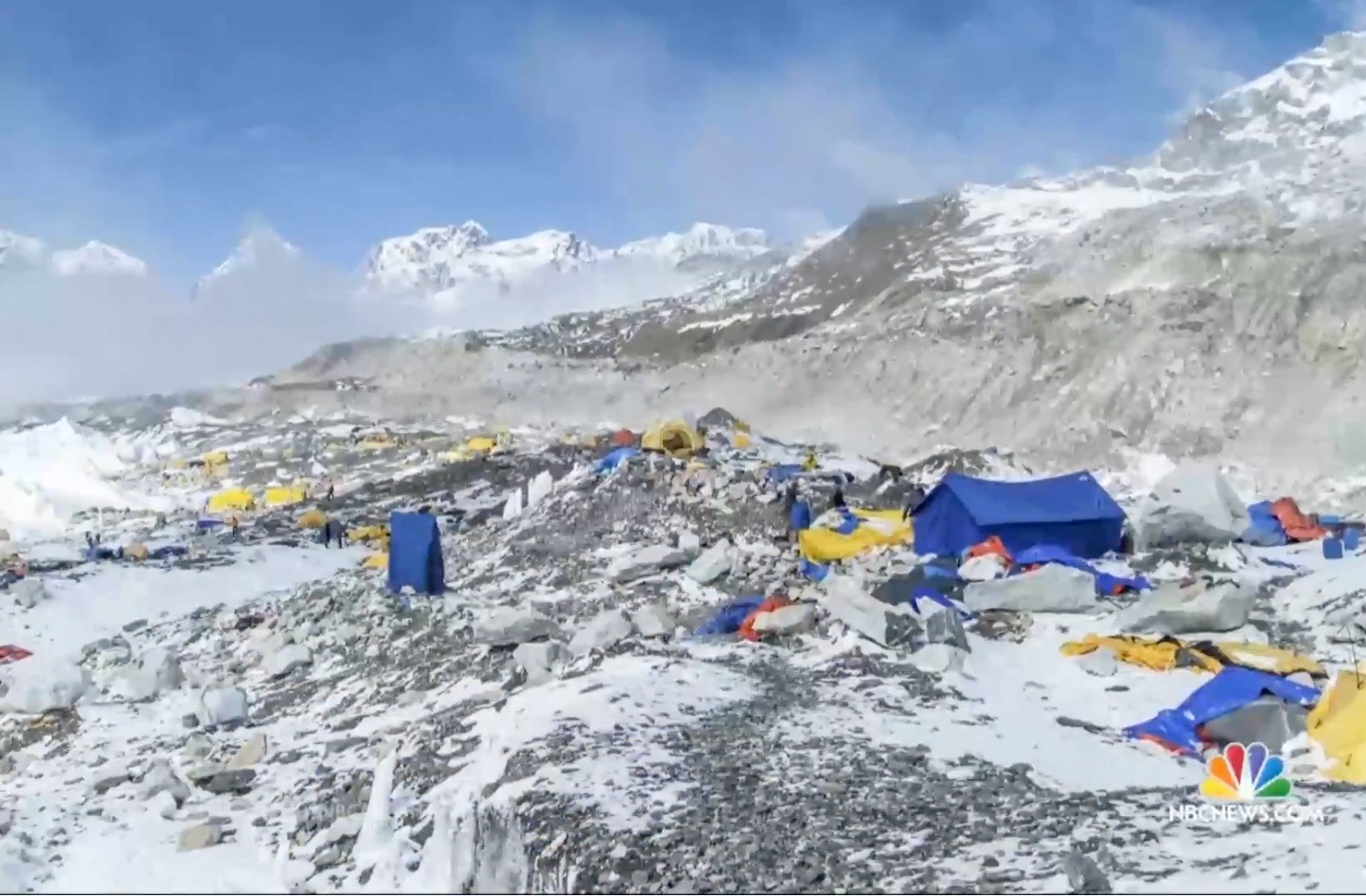
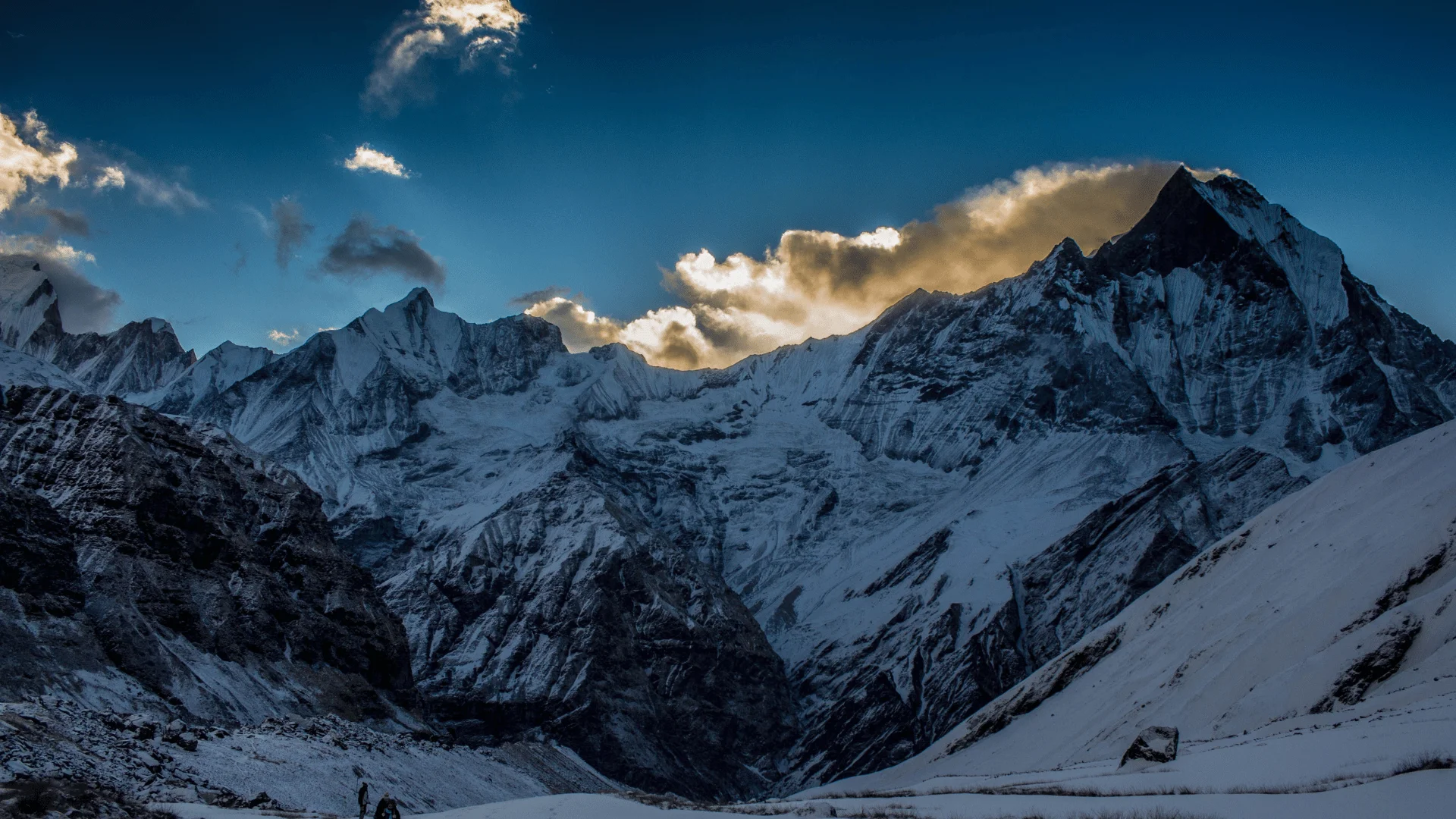
Filming at Everest Base Camp means producing professional video or film content at 5,364 meters above sea level in the Sagarmatha National Park, Khumbu region of northeastern Nepal. It requires trekking from Lukla (2,845m) over 10 to 14 days with a mandatory acclimatisation schedule, carrying or flying in all equipment from Kathmandu, and working in conditions like extreme cold, battery drain, altitude fatigue, and unpredictable weather that fundamentally change how a production operates.
It also produces footage that is genuinely impossible to capture anywhere else on earth. That is why more than 30 productions make this journey every year.
The equipment Things That Actually Go Wrong ( That Nobody Writes about)
Your Batteries will Die Faster Than you Expect
This is the single most common practical failure on first-time EBC productions. Lithium-ion batteries discharge 30 to 45 percent faster above 4,500 metres than at sea level, the thin air affects thermal management inside the cell and the performance drops significantly in cold overnight temperatures. A battery that lasts a full shooting day at home will last roughly half a day on a Himalayan dawn shoot.
The solution is not complicated: bring three times the batteries you planned for, and sleep with them. Overnight temperatures at EBC regularly reach -15°C to -20°C. A cold battery performs even worse than the altitude alone causes. The crews that wake up for the 5am Khumbu Icefall shoot and find dead cameras are always the ones who did not believe this until it happened.
Temperature Change Hurts Equipment More Than Cold Does
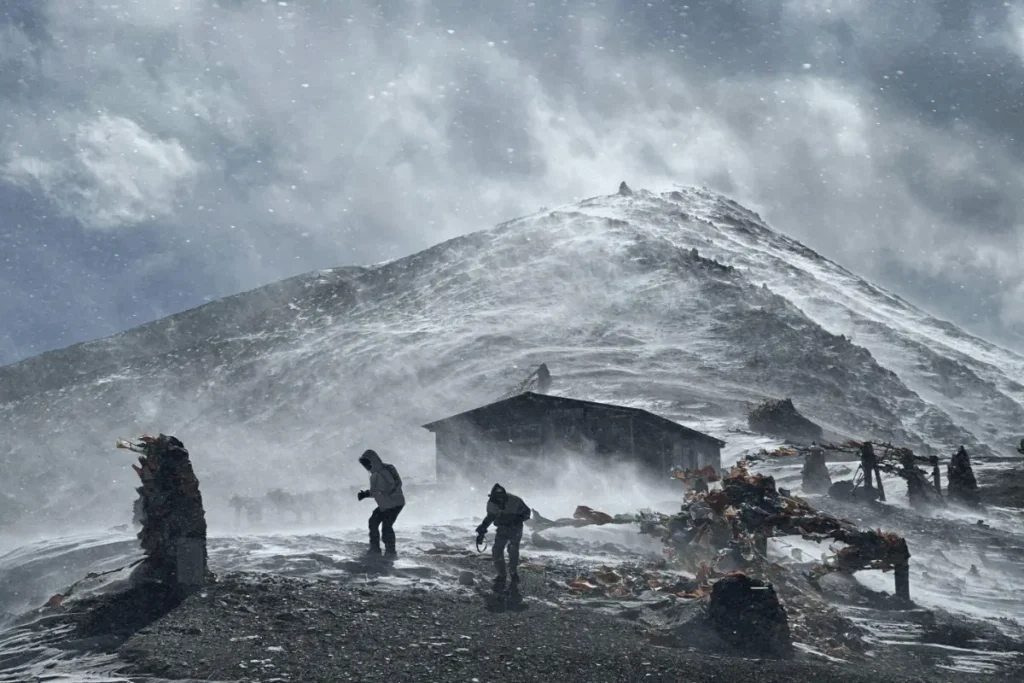
The cold itself is manageable with right preparation. What causes real damage is rapid temperature change, moving equipment from -15°C outside to a warm tent or teahouse causes condensation to form inside lens elements. At 5,000 metres, a fogged lens is not a minor inconvenience. It is a lost shooting day.
The protocol is simple but requires discipline: always let cameras equalise temperature in a vestibule or doorway for at least 30 minutes before bringing them into a warm space. Keep cameras in sealed cases with silica gel packs when not shooting. Avoid lens changes above 4,000m if possible every unnecessary lens change at altitude is a potential condensation or sensor dust event.
High-Altitude Camera Equipment That Actually Works
Not all cinema cameras handle the EBC environment equally. From 30+ Khumbu productions, here is what our team uses and why:
- ARRI ALEXA Mini LF: Our first choice for productions where dynamic range is critical. The Himalayan contrast challenge sunlit peaks against shadowed glaciers can reach 14 stops. The ALEXA handles it. Robust thermal management and proven cold-weather reliability.
- Sony VENICE 2: Excellent latitude and strong performance in monastery interior low-light conditions. Slightly heavier than ideal for trekking-heavy shoots but outstanding image quality.
- Sony FX9: The best option for shoots with significant trekking distance where weight is a genuine concern. Reliable in cold, good low-light, and small enough to carry without a dedicated porter.
- DJI Inspire 3 for drone work: Rated to 6,000m, though expect 35 to 40 percent shorter flight times at EBC altitude. Fly early morning before katabatic winds develop typically before 9am.
All of the above are available for rental from Icefall’s Kathmandu inventory. We test every piece of equipment for cold-weather performance before it leaves our facility.
Altitude Sickness and Film Crews: The Honest Picture
What Is Altitude Sickness for a Film Crew?
Altitude sickness or Acute Mountain Sickness (AMS) affects film crews at Everest Base Camp because the human body at 5,364 metres is receiving approximately 50 percent of the oxygen it is designed to function on. According to the Himalayan Rescue Association, around 15 percent of people who ascend to 5,000 metres experience some degree of AMS. For production crews working under physical and cognitive load on top of altitude exposure, the risk is higher.
Symptoms include headache, fatigue, nausea, dizziness, and disrupted sleep. Serious progression High Altitude Pulmonary Edema (HAPE) or High Altitude Cerebral Edema (HACE) is rare but life-threatening and requires immediate descent and evacuation.
How We Prevent Altitude Sickness on Production
The single most effective prevention is not medication, it is time. Proper acclimatisation means ascending slowly enough that the body adjusts at each elevation before going higher. For an EBC production, this means a minimum of two nights in Namche Bazaar (3,440m) before ascending further, with the full trekking schedule taking 10 to 14 days from Lukla. Rushing this schedule to save production days is the most expensive mistake a producer can make it turns shooting days into sick days.
1. All crew complete a pre-departure altitude risk screening before the production begins.
2. Diamox (acetazolamide) is available and briefed for all crew not mandatory, but available.
3. Portable hyperbaric chambers (Gamow bags) are carried on all Zone 4 productions.
4. A certified Wilderness First Responder is on crew for all shoots above 4,000m.
5. Daily go/no-go health assessment every morning before any crew ascends further.
6. Helicopter evacuation insurance is mandatory; evacuation partners can reach most EBC-altitude locations within two to four hours.
Sherpa Film Support in Nepal: What It Actually Means for Your Production
What Is Sherpa Film Support?
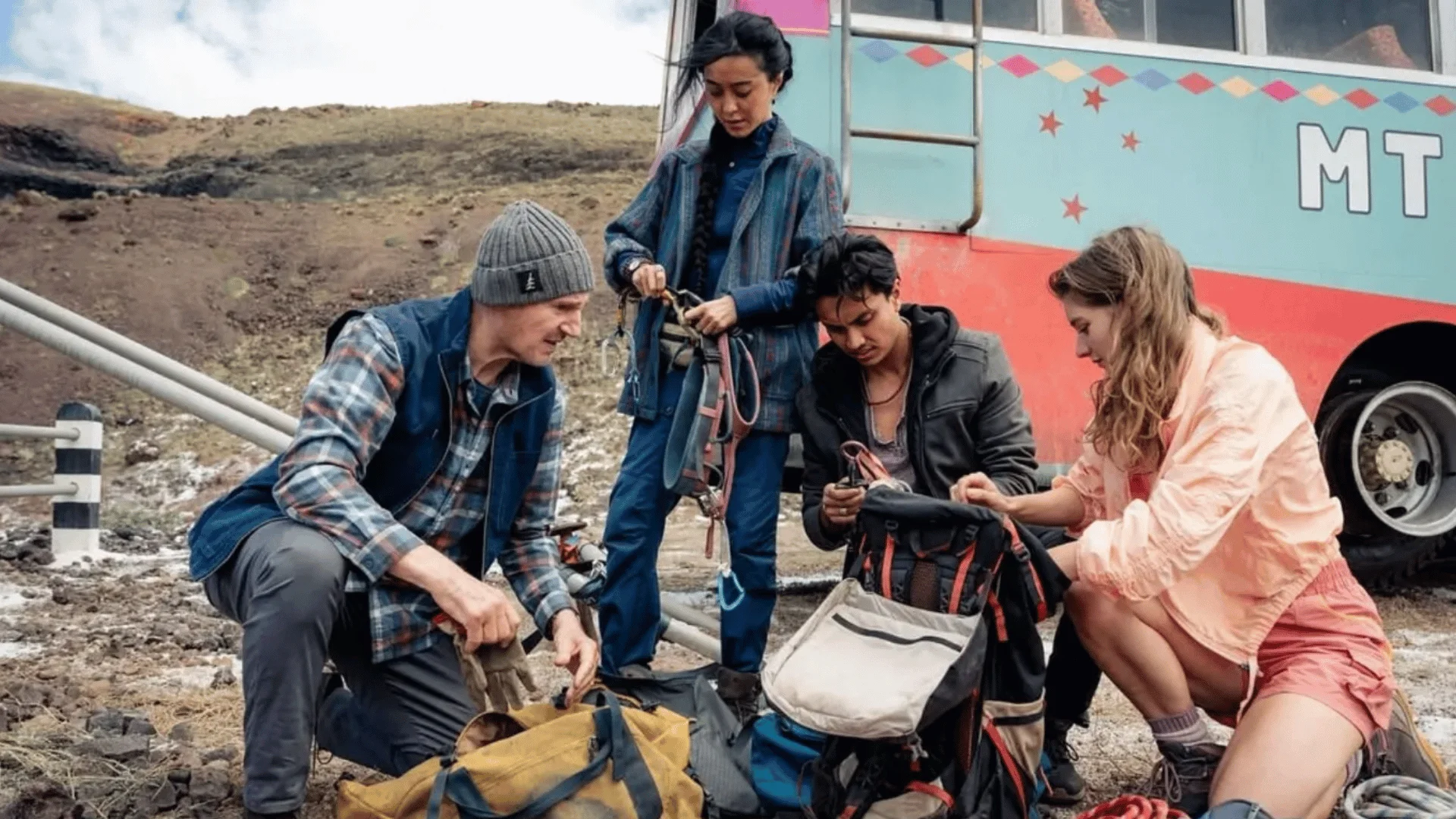
Sherpa film support in Nepal means having experienced Sherpa guides and high-altitude crew members as an integrated part of your production team not just as porters carrying equipment, but as active production partners who bring route knowledge, weather reading, community relationships, and logistics problem-solving that no international crew can replicate independently.
This distinction matters. The difference between a Sherpa porter and a Sherpa production partner is the difference between having someone carry your camera and having someone tell you that the weather is about to close in from the southwest two hours before any satellite forecast shows it because they have been reading this mountain their entire lives.
What Sherpa Support Provides on an EBC Production
- Route and condition assessment: Real-time decision-making about trekking pace, camp placement, and go/no-go on shooting days based on lived environmental knowledge.
- Equipment carry and management: Each Sherpa porter carries 25 to 30kg and knows exactly how to protect camera cases in the mountain environment. Porter teams for EBC productions typically number 6 to 12 people depending on kit size.
- Community access: Sherpa guides provide the community relationships that give productions authentic access to monastery ceremonies, village life, and cultural events that would be closed to an unknown foreign crew.
- Emergency response: In the event of a medical emergency at altitude, a Sherpa guide’s ability to organise rapid descent and communicate with helicopter evacuation services is not a supplementary capability, it is the primary emergency response system above 4,000m.
- Language and cultural liaison: English-speaking Sherpa guides bridge the gap between international production requirements and the cultural protocols of the Khumbu community.
The EBC Permits You Need and How Long They Take
EBC productions require several permits running simultaneously. Here is the full list and realistic processing times:
- MoIC standard filming permit: 10 to 15 working days. Apply a minimum three weeks before production.
- Sagarmatha National Park filming permit: 7 to 10 working days, processed alongside MoIC permit.
- TIMS trekking permit: Available within 1 to 2 days from the Nepal Tourism Board.
- CAAN aerial permit (if drone filming): 10 to 14 working days. Required separately from all other permits.
- Nepal Mountaineering Association coordination letter (spring season only): Required if filming during April to May climbing season when multiple expeditions are operating at EBC.
Icefall Productions handles all permit coordination end-to-end. We track processing in real time and escalate when needed. All permits are included in our production service coordination.
Frequently Asked Questions: Filming at Everest Base Camp
How much does it cost to film at Everest Base Camp?
A five-person international crew trekking to EBC, filming for three days, with 10 days total in-country including acclimatisation, should budget $35,000 to $65,000 USD for Nepal-side costs. This covers permits, Icefall coordination, local crew including Sherpa guide and porter team, equipment rental from our Kathmandu inventory, Kathmandu-Lukla domestic flights, trek teahouse accommodation, and Kathmandu hotel. Helicopter support adds $1,200 to $2,500 USD per flight hour if required.
Do you need mountaineering skills to film at Everest Base Camp?
No. Everest Base Camp sits on the glacier moraine below the Khumbu Icefall and is reached by a trekking path, not a technical climbing route. Physical fitness, a proper acclimatisation schedule, and genuine respect for the altitude are what is required not technical climbing skills. Our oldest EBC production crew member was 64.
What is the best altitude sickness prevention for film crews?
Time is the most effective altitude sickness prevention for film crews specifically, adequate acclimatisation time built into the production schedule. Two nights minimum in Namche Bazaar (3,440m) before ascending further is the foundational protocol. Diamox is available and can help but is not a substitute for proper acclimatisation pace. Rushing the ascent to save scheduled days consistently produces sick crew and lost shooting days.
Can you fly drone cameras at Everest Base Camp?
Yes, with proper permits. Drone filming at EBC requires a CAAN aerial permit and a Sagarmatha National Park drone permit both processed separately. At EBC altitude (5,364m), expect 35 to 40 percent shorter flight times and reduced payload compared to sea-level performance. Fly early morning before katabatic winds develop. During spring climbing season, coordinate all drone operations with expedition operators for airspace safety.