

On most Himalayan productions, the real logistics problem starts where the road ends. Trucks and jeeps can bring a crew to a trailhead, but after that every camera body, battery, light stand and hard drive travels on a human back or an animal’s. How well you plan that last stretch decides whether your crew is shooting at golden hour on day four or sitting in a village waiting for a missing case.
This guide explains the three systems that move gear beyond the roadhead in Nepal: porters, yaks and zopkyo, and mules. It shows how to choose between them, how to pack for each, and how to treat the people and animals who make the shoot possible. It builds on our wider guides to filming logistics in Nepal and transporting film equipment and flying to Lukla, and on what we have learned supporting crews in the Everest region, Annapurna and Upper Mustang.
Where the road ends: understanding the last-mile problem
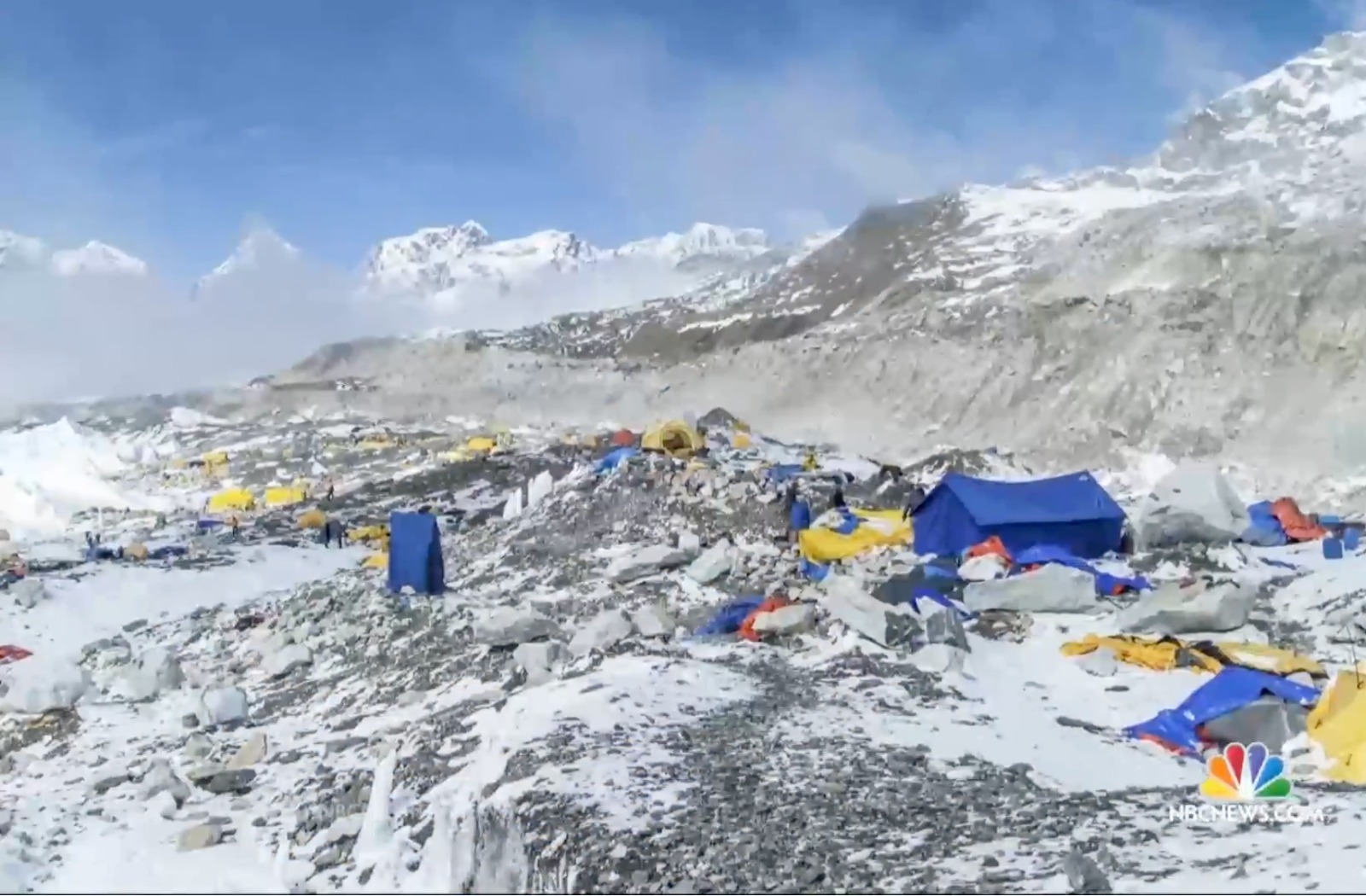
Nepal’s road network reaches surprisingly far, yet many of the country’s most filmable places sit beyond it. The Khumbu is the clearest example. Lukla, the gateway to the Everest region, sits at roughly 2,850 metres and has no road access; crews fly in on a 527-metre runway and everything after that moves on foot. The same pattern repeats in Dolpo, Manaslu, Kanchenjunga and the upper valleys of Mustang, where trails take over from tracks.
That shift creates three problems at once.
- Weight. Every kilogram has to be carried by someone, so gear lists that look reasonable at a Kathmandu rental house become a payroll issue on the trail.
- Fragility. Cameras, lenses and drives that were treated gently on a van seat now ride on a moving back, a swaying pack saddle or a basket knocked against rock walls.
- Time. Your schedule is no longer set by shooting days but by the pace of the slowest porter or animal, plus weather and altitude.
None of these is a reason to avoid remote locations. They are reasons to plan the last mile as seriously as the shoot itself. Delays here also compound the risks we describe in our guide to flight delays and weather buffers, because a single missed flight can push your carriers’ schedules back by days.
The Khumbu also sits inside Sagarmatha National Park, a UNESCO World Heritage Site, which means environmental and permit rules shape how many people and animals you can bring, a point we return to below.
Porters: the flexible backbone of Himalayan film logistics
Porters are the most adaptable option on any Nepal trail. They carry loads in a traditional doko basket or in packs, and they go where animals cannot: steep stone staircases, narrow ledges, landslide crossings and suspension bridges where an animal train would have to queue. For fragile or time-critical kit, such as the camera body, a lens set or a drone, a trusted porter walking with your crew is often safer than any other method.
Typical loads. Many responsible operators work to a ceiling of around 30 kilograms per porter, excluding the porter’s own belongings, and lower it at altitude, on steep ground or in bad weather. Treat that as a maximum, not a target. Welfare guidance on porter loads, clothing, shelter and medical care is summarised by Medex, the expedition medicine group, which points to International Porter Protection Group standards.
A simple budget. Divide your total carried weight by a realistic load, then add a buffer. If your team needs 600 kilograms of equipment, food and camp supplies moved and you plan 25 kilograms per porter, you need 24 porters before spares and before anyone carries personal bags. That headcount also has to be fed, sheltered and insured, which is why porter-only plans get expensive quickly for large crews.
When porters are the right call
- Terrain is too steep or exposed for animals.
- The shoot is small, light and fast-moving.
- You need flexibility to split loads across several camps.
- Fragile items need a human to watch them.
Where they struggle. Porter-only logistics scale poorly for heavy cinema packages, large lighting kits or long stays where food and fuel add weight every day. In those cases porters usually work alongside animals rather than replacing them.
How to hire. Do not collect porters informally at a trailhead. Book through a licensed local operator or film fixer who can confirm pay rates, insurance, clothing and a replacement plan if someone falls ill, and who can slot carriers into your wider local crew.
Yaks and zopkyo: the high-altitude caravan
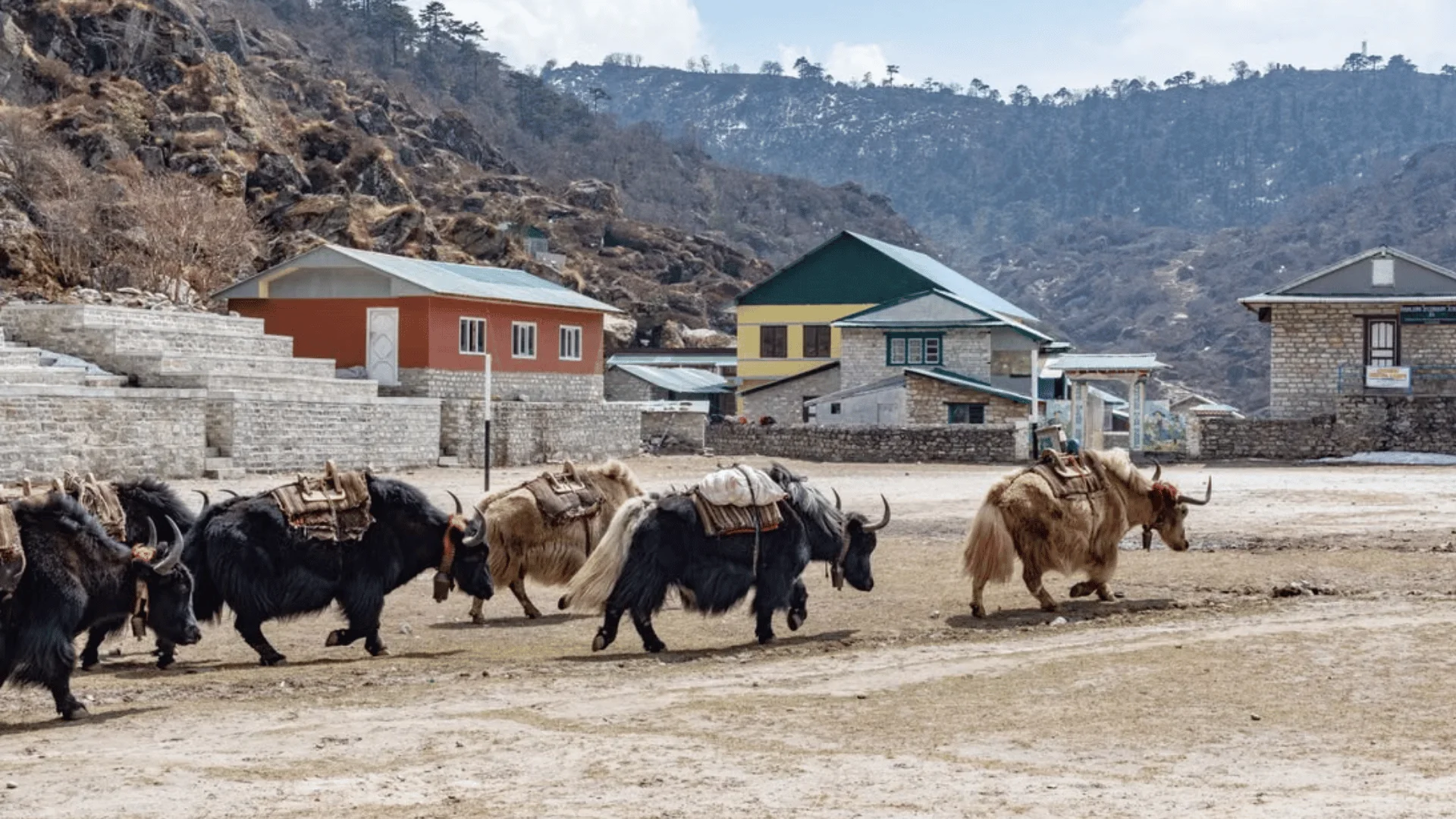
Above the tree line, yaks are the pack animal of choice. They tolerate cold and thin air far better than lowland animals, and herding families have used them for centuries to move grain, salt and trade goods. Today yak caravans carry supplies to remote tea houses and base camps in regions such as Everest, Annapurna and Langtang. One range-management article in a University of Arizona journal archive describes yaks crossing passes of around 17,000 feet with loads of roughly 150 pounds (about 68 kilograms), which shows why expeditions rely on them for heavy base camp equipment.
Zopkyo and dzo. At lower elevations, herders often use dzo or zopkyo, hybrids of yak and domestic cattle, because pure yaks cope less well with warmth. In the Khumbu you will commonly see both, depending on the altitude of the section you are crossing. A well-organised caravan hands loads over between animal types as the trail climbs.
What this means for a film crew
- Capacity. One animal carries far more than a porter, so a handful of animals can replace dozens of people for heavy cases, generators, lighting and food.
- Handlers. Yaks come with their herders, who decide when loads go on and come off. Agree start times, rest stops and daily distances in advance.
- Pace. Caravans keep steady, shorter stages and stop early so animals can graze. Your shooting schedule must bend to this rhythm, not fight it.
- Behaviour. Loaded animals can swing wide on narrow trails, rub against rock faces and spook at drones or sudden noise. Keep fragile cases off the outside of the load and brief the crew on trail etiquette.
Yak caravans are also a story in themselves. A line of animals under peaks such as those on the Gokyo and Everest trails is the kind of image directors ask for, and it is easy to film when the crew is already travelling with the caravan.
Mules and horses: mid-altitude workhorses
Below the yak zone, and across the drier trans-Himalayan valleys, mule and horse trains are the standard way to move heavy loads. They are quicker than yaks on gentle trails, they handle long daily stages well, and they are widely used in places such as Dolpo, where trekking operators normally rely on mules for expedition equipment unless a trip is deliberately planned around yaks. On the lower Everest trails they are a constant presence, and researchers at the University of Colorado Boulder have written about the environmental impact of mules on Everest-region trails.
Advantages for production
- Speed and range. Mule trains can cover long daily stages, which suits multi-location schedules.
- Matched loads. Pack saddles take paired loads, so standardised cases balance neatly on each side.
- Cost control. For mid-altitude routes, animals are usually cheaper per kilogram than large porter teams.
Limits to plan around
- Altitude and terrain. Mules and horses generally give way to yaks and porters on the highest passes and the steepest sections.
- Trail right of way. Loaded animals have priority on narrow paths. Your crew should step to the uphill side, never the drop side, and keep tripods and drone cases tucked in.
- Trail wear and waste. Hooves erode paths and droppings affect water and campsites, so route and camp choices matter in sensitive areas.
In restricted and remote areas such as Upper Mustang, your permit conditions, local rules and village agreements will often decide which animals you can use and where you can camp.
Choosing the right method for your route
Most productions use a mixed convoy: animals for the heavy base load, porters for fragile hero kit and for sections animals cannot manage. Use the table below as a starting point, then confirm details with your fixer.
| Method | Best for | Strengths | Watch-outs |
|---|---|---|---|
| Porters | Steep, narrow or exposed trails; small crews; fragile kit | Go anywhere, flexible, easy to split across camps | Many people to feed, shelter and insure; load limits per person |
| Yaks | High altitude above the tree line; heavy base camp loads | Handle cold and thin air; large capacity per animal | Slower, shorter stages; herder-led timing; can spook near drones |
| Zopkyo and dzo | Transition zones between mid and high altitude | Strong and steady where pure yaks overheat | Need handover plans between animal types |
| Mules and horses | Mid-altitude and dry trans-Himalayan valleys | Fast, long stages, balanced paired loads | Trail wear, right-of-way rules, limits on the highest passes |
A practical way to decide is to work backwards from your shot list. Mark the locations where you need the camera at dawn or dusk, then plan your carriers so the priority kit arrives a day ahead of the heavy base load. If a location can be reached only by a short, steep section, send a small porter team forward with the essentials and keep the animals at the nearest suitable camp.
Packing and protecting camera, lighting and data gear
The best carrier plan fails if the cases are wrong. Pack for the worst-handled journey in your route, not the best.
Standardise your cases. Use a small number of hard, weatherproof case sizes and keep each one under the load limit you set for porters, so any carrier can take any case. Build cases in matched pairs of similar weight, because pack animals need balanced loads. Pad corners generously, since cases will bump rock walls and each other.
Label and prioritise. Colour-code cases by department and by priority: carried with the crew, arriving a day ahead, or following with the base load. Keep a printed and a digital manifest that lists every case, its contents and its weight.
Waterproof everything. Rain, stream crossings, snow and condensation all threaten electronics. Line cases with sealed bags, add silica gel packs and keep a spare set of dry bags for emergencies. If you shoot in the rainy season, add extra protection and allow time for drying out gear.
Protect data first. Never let both copies of your footage travel in the same load. Split card backups and drives between at least two carriers, and keep the master copy with a person you trust rather than on an animal.
Batteries and cold. Cold drains lithium batteries quickly and flights to mountain airstrips restrict how batteries can travel, so keep spares warm inside clothing and check airline and airport rules before you fly. For aerial work, confirm drone rules before you decide where drone cases will ride.
Sound and delicate items. Microphones, windshields and recorders are easy to crush. Keep them in rigid cases and carry them with the crew where possible.
Scheduling, weight budgets, permits and costs
Build a weight budget early. List every item you plan to carry beyond the roadhead, including food, fuel, camp equipment and the carriers’ own supplies, then weigh it. Teams routinely underestimate by a wide margin because they forget that food and fuel for the carriers themselves add weight each day. Add a contingency buffer, and cut anything that does not directly earn a shot.
Schedule around carriers, not just call sheets. Allow rest days for animals and people, plan for acclimatisation on high routes, and keep one or two buffer days for weather and delayed flights.
Permits and fees. Remote routes usually involve more than one layer of permission. In the Khumbu, for example, visitors need a Sagarmatha National Park entry permit and a permit from the local rural municipality, and fees and procedures change over time, so confirm current rules with your fixer and the official bodies. The Department of National Parks and Wildlife Conservation is the main official starting point for park rules. Film shoots add their own approvals on top, which we explain in our film permits guide.
Costs. Daily rates for porters, yaks and mules vary by region, season, route length and the number of animals needed, and the cheapest quote often leaves out insurance, food or return days. Ask every supplier for a written quote that lists what is included, who pays for handlers’ food and lodging, and what happens if weather stops the caravan. Match your insurance to the real risks of the route, including evacuation cover.
Ethics, welfare and environmental responsibility
The people and animals who carry your gear are part of your crew, and how you treat them reflects on your production.
Porter welfare. Porters can suffer altitude illness just like visitors, and in the past ill porters were sometimes left to descend alone. Standards promoted by the International Porter Protection Group include proper clothing and footwear, shelter, food and drink, medical care and insurance, care on descent if ill, and loads suited to the individual. Build these into your budget from day one, and do not use child porters.
Animal welfare. Keep loads within what handlers say their animals can carry, allow rest and grazing time, and never push a caravan to meet a shot. Respect the handlers’ judgment on weather, river crossings and trail conditions. They know their animals and the route far better than any production schedule does.
Environmental care. Mountain areas are fragile and often protected. Carry out all waste, avoid single-use packaging, manage campsites carefully and choose routes that limit trail damage. Our guide to eco-friendly filmmaking in fragile Himalayan ecosystems goes into detail on practical steps.
Safety planning. Remote carrier routes can be hours or days from medical help. Agree an evacuation plan before you leave and brief everyone on it, including handlers.
Local benefit. Hiring local carriers directly supports mountain communities that rely on seasonal work. Pay fairly and on time, tip transparently, and credit the people who made the shoot possible.
Last-mile checklist for your next remote shoot
- Map the route and mark where the road, airstrip or trailhead ends.
- Weigh all gear, food and fuel, and build a weight budget with a buffer.
- Choose carriers by altitude and terrain: porters, yaks, zopkyo, mules or a mixed convoy.
- Standardise cases, keep each under your load limit and pack animal loads in matched pairs.
- Colour-code and label every case, and keep a printed and digital manifest.
- Split footage backups across at least two carriers.
- Confirm permits, local fees and film approvals with your fixer and the official bodies.
- Get written quotes that state what is included, including handlers’ food, lodging and insurance.
- Build rest days, acclimatisation days and weather buffers into the schedule.
- Agree welfare standards, an evacuation plan and waste rules with everyone before departure.
Plan your remote shoot with Icefall Productions
Moving gear beyond the roadhead is one of the least glamorous parts of filming in the Himalayas and one of the most important. Done well, it is invisible: cases arrive when they should, crews stay healthy and the shoot runs to plan. Done badly, it drains budgets and schedules before the first shot.
Icefall Productions has coordinated remote logistics for international crews across Nepal for years, from permits and local crew to equipment and safety planning. When you are ready to plan your route, contact our team and we will help you build a carrier plan that fits your shoot.