

Pokhara is one of the few places in the world where you can film a calm lake at breakfast and a snow-capped Himalayan wall behind it by sunrise. For documentary makers, commercial directors, travel crews and feature productions, it offers variety, access and a gentler pace than Kathmandu. It is also the natural staging point for filming in the Annapurna region.
This guide explains how filming in Pokhara works in practice: what permits you need, which locations deliver on camera, how to move your crew and gear, and when to schedule your shoot. It is written for producers, line producers and directors planning a first shoot in Nepal’s lake city.
Why Production Crews Choose Pokhara
Pokhara works well for film for three reasons:
- Visual range in a small area. Within a short drive you can shoot lakes, forested hills, villages, temples and mountain views, which keeps company moves short and shooting days productive.
- Easy mountain backdrops. Annapurna and Machhapuchhre rise behind the valley, so you can capture dramatic peaks without trekking for days.
- Good infrastructure for Nepal. Hotels, transport, restaurants and rental support are well established, which makes it a sensible base for longer shoots.
It also suits many production types, from lifestyle and tourism commercials to adventure content, documentaries and drama. Our overview of filming locations in Nepal beyond Everest shows how Pokhara fits into a wider itinerary.
Permits for Filming in Pokhara
Nepal’s permit system applies in Pokhara just as it does elsewhere in the country. Rules change, so always confirm current requirements with your local partner before you apply. In broad terms:
- Filming permit. Foreign productions apply through the Ministry of Communication and Information Technology, with the Film Development Board coordinating, and must appoint a local production company to process the paperwork. A liaison officer is normally attached to foreign crews.
- Location permissions. Temples, private property, lakeside businesses and public spaces may each need their own approval or at least a courtesy agreement. Do not assume that a national permit covers every site.
- Protected area permits. If your schedule extends from Pokhara into trekking areas, you may need additional approvals for the Annapurna Conservation Area, which is managed through the National Trust for Nature Conservation.
- Drone clearance. Aerial filming needs separate clearance from the Civil Aviation Authority of Nepal. Pokhara has an airport, so flight restrictions around it matter. Apply early.
- Visas. Nepal does not issue a dedicated film visa, so crew should enter under the correct category. See our film visa guide.
For the full process, read our film permits in Nepal guide and our drone filming permit guide. Our article on film insurance and liaison officer requirements explains what foreign productions must arrange before cameras roll.
Best Filming Locations in Pokhara
Pokhara’s best locations are close together, which makes scheduling easier. These are the ones productions return to most:
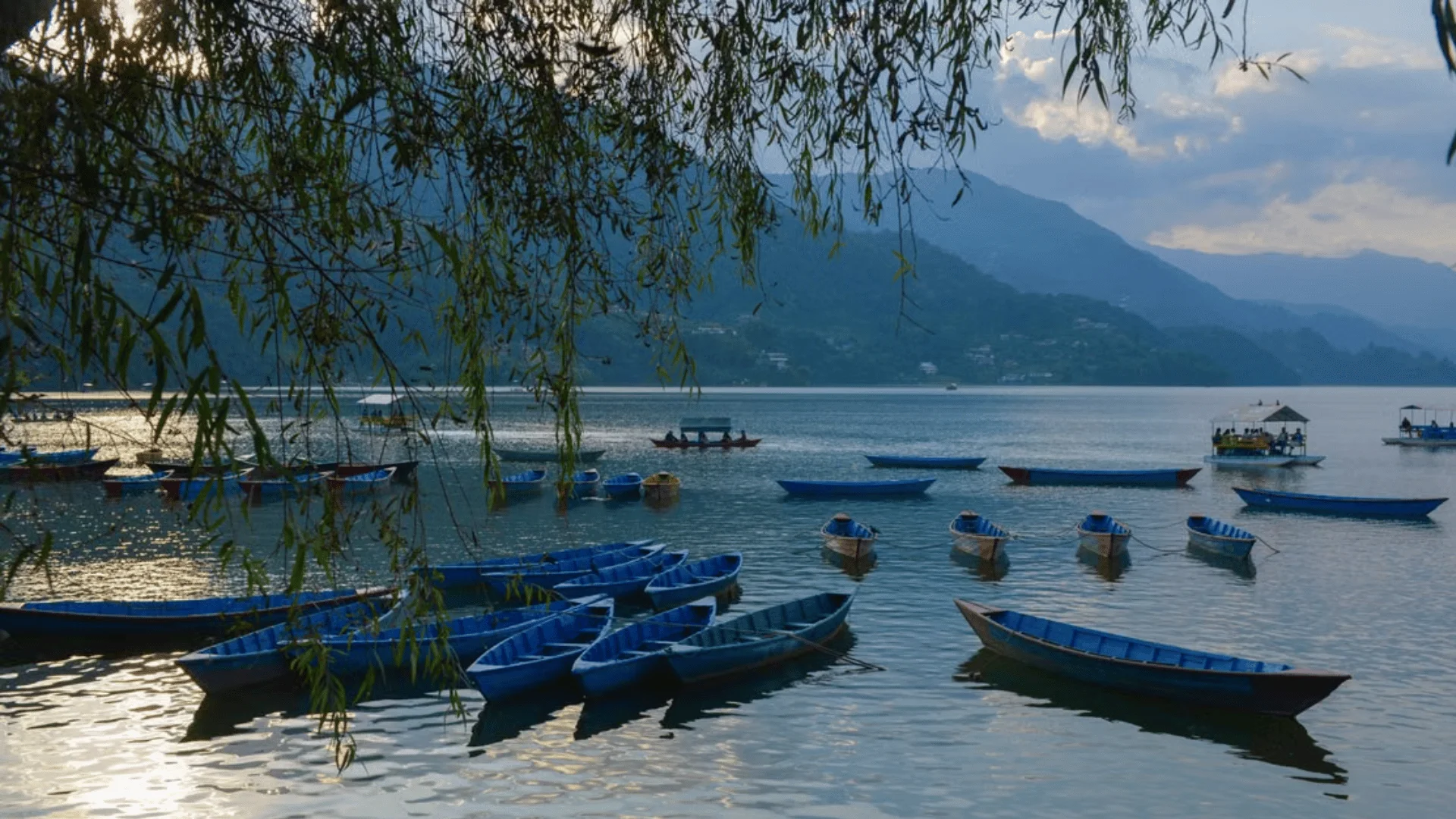
- Phewa Lake. The visual centrepiece of the city. Boats, reflections of Machhapuchhre and the lakeside promenade suit commercials, travel segments and drama. Early morning gives the calmest water and the cleanest reflections.
- Sarangkot. A hilltop viewpoint famous for sunrise over the Annapurna range and a launch point for paragliding. It is excellent for establishing shots and aerial work, though it gets busy with visitors at first light.
- World Peace Pagoda. A white stupa on a ridge above the lake, with wide views of the valley and mountains.
- Begnas and Rupa lakes. Quieter and less developed than Phewa, these lakes are good when you want calm water and rural scenery without the crowds.
- Old Bazaar and temples. Narrow streets and shrines give you local colour for documentaries and character-led scenes. Always ask permission before filming people or inside sacred spaces.
- Seti River gorge and waterfalls. Dramatic natural features that add texture to adventure and documentary work.
- Village and hill roads around the valley. Terraced fields and traditional homes give you the countryside look without long transfers.
Machhapuchhre, the Fishtail mountain, is considered sacred, which is worth bearing in mind when you plan narrative or promotional content that involves it. Our location scouting article on location scouting and permitting support in Nepal explains how a recce saves time and avoids surprises.
Logistics: Getting Crew and Gear to Pokhara
You have two main options for reaching Pokhara from Kathmandu: a short domestic flight or a long road journey. Flights save time and are usually the best choice for crews with limited days. Road travel takes much longer and is better for productions moving a lot of equipment who want to shoot along the way.
Practical points:
- Baggage limits. Domestic flights have weight limits, so plan your gear packing carefully and confirm what airlines allow for camera cases, tripods and batteries. Our guide to domestic flights, Lukla and transporting film equipment covers this in detail.
- Local transport. Vehicles suited to narrow hill roads are better than oversized vans. Your local partner can arrange transport that matches your kit and crew size.
- Equipment. Larger rental needs can be sourced in Nepal, which reduces what you have to fly in. See our guides to film equipment rental in Nepal and on-site gear support.
- Customs. If you are bringing gear into the country, plan for clearance well ahead of time. Our customs clearance guide explains the process.
For a wider view of planning, our article on filming logistics in Nepal is a good companion read.
Best Time to Film in Pokhara
Season has a major effect on what you see through the lens.
- Autumn (roughly late September to November). Usually the best window, with clearer skies, sharper mountain views and stable weather. It is also the busiest time, so book crew and accommodation early.
- Spring (roughly March to May). Warm light, flowers on the hills and good conditions, though haze can soften distant mountains.
- Winter (December to February). Cool, clear mornings can give excellent mountain visibility, with chilly evenings.
- Monsoon (roughly June to September). Pokhara receives heavy rainfall, and clouds often hide the mountains. It is lush and green, but harder for schedules and aerial work.
If your story depends on seeing the peaks, avoid the monsoon. If you want a moody, green aesthetic, it can work in your favour with proper planning. See our best time to film in Nepal and monsoon filming guide for more.
Using Pokhara as a Base for Annapurna
Many crews use Pokhara as the launch point for the Annapurna region. Staging here means you can finalise permits, test equipment, hire porters and crew, and check the weather before heading into the mountains. Build in acclimatisation and buffer days, because conditions change fast at height. Our guide to filming in the Annapurna region covers routes, permits and staging in depth.
Working With Local Crew and Fixers
Pokhara has a skilled local film community, and hiring locally helps with language, access and community relationships. A good fixer will know which sites need permission, who to talk to at lakeside businesses and temples, and how to avoid peak tourist crowds. Read what a film fixer in Nepal does and our guide to working with local Nepali crew to see how this support works on a real shoot. The Nepal Tourism Board is also a useful official source for destination information.
Frequently Asked Questions
Do I need a permit to film in Pokhara?
Foreign productions are generally required to obtain a filming permit through a local production company, and some locations or activities need extra approvals. Always check current rules with your local partner before travelling.
Can I fly a drone in Pokhara?
Drone filming needs clearance from the Civil Aviation Authority of Nepal, and the presence of an airport adds restrictions. Apply well in advance and follow the conditions of your approval.
What is the best time of year for filming in Pokhara?
Autumn is generally the best season for clear weather and mountain views. Spring and winter also work well, while the monsoon brings rain and cloud.
How do crews travel from Kathmandu to Pokhara?
Most crews fly, which is much faster than the road. Productions with heavy equipment may choose to travel by road with a dedicated vehicle.
Can I use Pokhara as a base for filming in the Annapurna region?
Yes. Pokhara is the usual staging point, and it makes sense to finalise permits, crew and logistics there before heading into the mountains.
Plan Your Pokhara Shoot With Icefall Productions
Filming in Pokhara rewards crews who plan ahead: the right permits, a good local team, smart transport and the right season. Icefall Productions supports international productions with permits, location scouting, equipment, crew and logistics across Nepal, from Pokhara’s lakes to the high Himalaya.
Ready to plan your shoot? Contact the Icefall Productions team and tell us about your project, locations and dates.