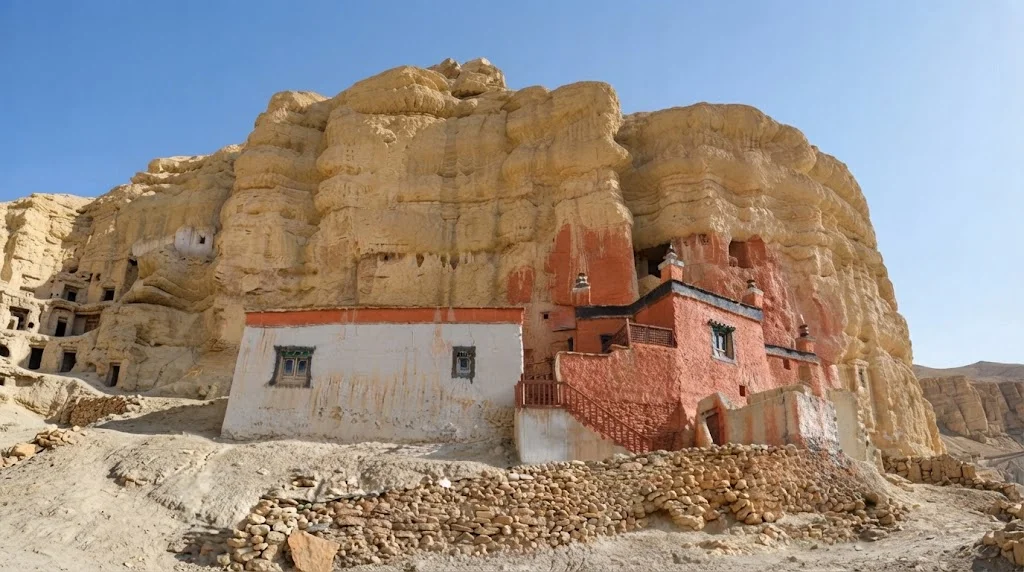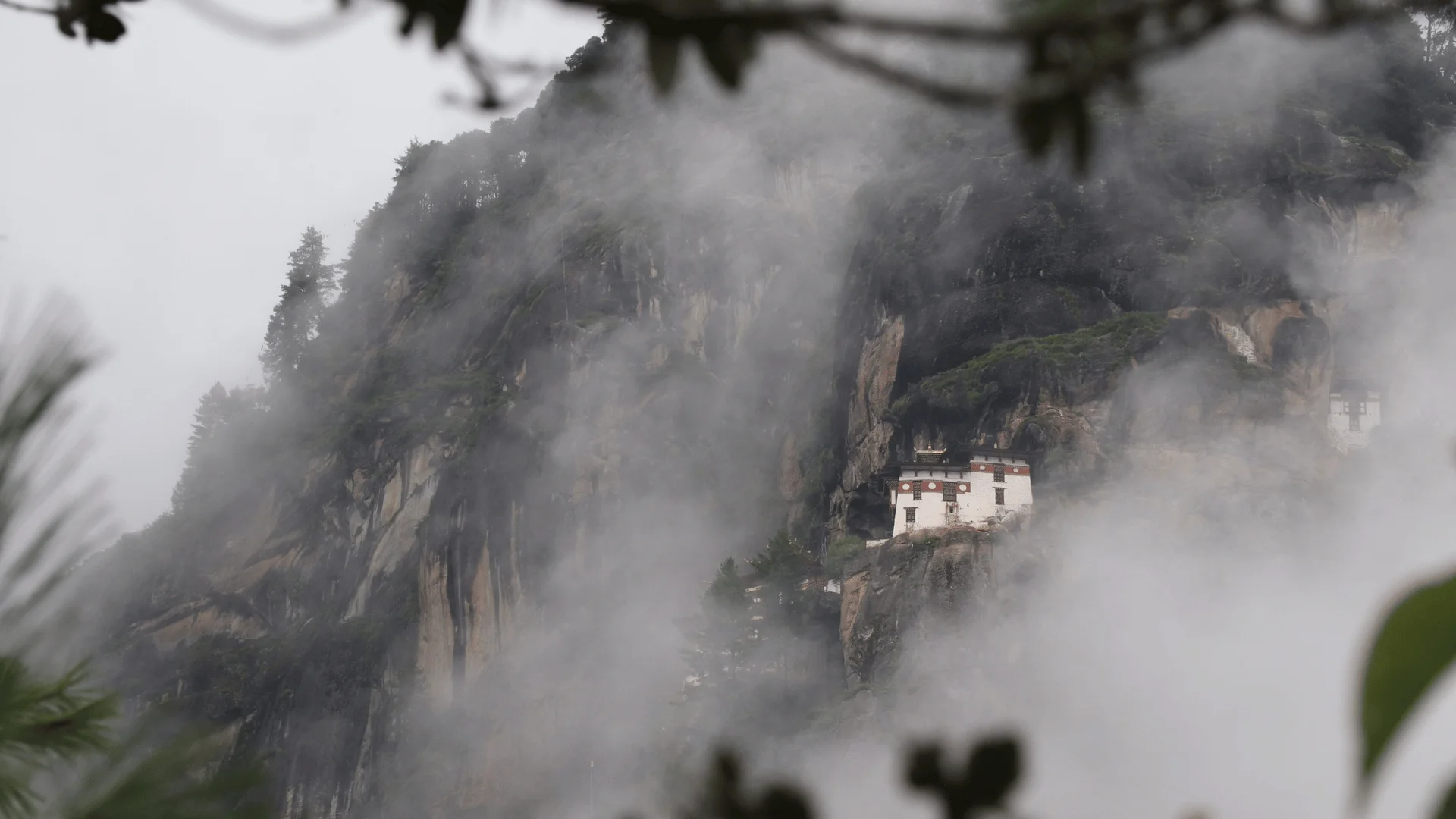
Upper Mustang is one of the last places on earth that still looks like it belongs to another century. Whitewashed monasteries cling to red cliffs, prayer flags snap in constant wind, and the walled city of Lo Manthang sits inside a high-altitude desert that gets almost no rain. For a production team, it is a location that does not need much dressing. It also happens to be one of the most tightly regulated regions in Nepal to film in, and that combination of visual reward and bureaucratic complexity is exactly why productions call us before they call anyone else.
This guide walks through what it actually takes to bring a crew into Upper Mustang, from the permit chain to the terrain realities that scripts on paper tend to underestimate.
At a Glance
- Upper Mustang is a restricted border region, not just a remote one, so filming requires layered government approval, not a single location permit
- A national film permit from the Film Development Board and Ministry of Communication and Information Technology is the starting point for any foreign crew
- The Ministry of Home Affairs must separately approve filming in Upper Mustang and Dolpa specifically
- Drone work needs Civil Aviation Authority of Nepal clearance in addition to the restricted area permit
- Entry beyond Kagbeni requires a Restricted Area Permit through the Department of Immigration, plus an Annapurna Conservation Area Permit
- The trekking-permit fee structure changed in late 2025, and productions should confirm current rates rather than budgeting off older figures
Why Upper Mustang Is Different From Other Himalayan Locations
Most of Nepal’s mountain regions require a conservation area permit and, at most, a national park entry fee. Upper Mustang sits in a different category entirely. The region borders the Tibet Autonomous Region of China, and everything north of the village of Kagbeni has been designated a restricted area since it opened to outside visitors in 1992. That status exists for security and cultural preservation reasons, and it is not something a production can work around with a bigger crew or a bigger budget. It changes who signs off on your shoot.
If you have already read our guide to filming in the Annapurna region, Upper Mustang sits inside the same conservation area on paper but functions as its own permitting track in practice, layered on top of everything Annapurna requires.
The Permit Chain, Step by Step
1. National Film Permit (FDB and MoCIT)
Every foreign production filming anywhere in Nepal starts here. The Film Development Board and the Ministry of Communication and Information Technology require a formal application from a locally registered production company, a script or synopsis appropriate to the project type, a full crew list with passport details, and an equipment manifest with declared values for customs. This permit is what makes everything downstream possible, and it typically takes about a week to process when the paperwork is complete, though we build in more time during peak autumn and spring shooting seasons.
2. Ministry of Home Affairs Approval
Upper Mustang and Dolpa are named specifically in Nepal’s filming regulations as regions requiring separate clearance from the Ministry of Home Affairs, on top of the national film permit. This is a distinct approval, not a formality tacked onto the FDB process, and it is where projects without a local coordinator tend to stall.
3. Restricted Area Permit (Department of Immigration)
Beyond Kagbeni, every crew member needs a Restricted Area Permit issued through the Department of Immigration. This permit can only be processed through a licensed Nepali agency, not applied for directly by a foreign production. Note that the fee structure changed in November 2025, when the government replaced the old flat USD 500 charge for the first ten days with a per-day rate. Rules around minimum group size have also been relaxed since then. We confirm current rates and conditions with Immigration before quoting any production, since this is one of the fastest-moving pieces of Nepal’s permit landscape.
4. Annapurna Conservation Area Permit
Upper Mustang falls inside the Annapurna Conservation Area, managed by the National Trust for Nature Conservation. A separate ACAP permit is required alongside the Restricted Area Permit, and it comes with its own conditions around camping, waste, and access to sensitive sites like monasteries and chortens.
5. Drone and Aerial Filming Clearance
If your shot list includes any aerial work, and in a landscape like Mustang it almost always does, you will need clearance from the Civil Aviation Authority of Nepal on top of the restricted area approval. Drone rules here are stricter than in more open regions because of the proximity to the international border, and flights near Lo Manthang’s walled city and monastery complexes carry additional cultural sensitivity that goes beyond the regulatory requirement.
6. Department of Archaeology Clearance for Heritage Sites
Lo Manthang, the royal palace, and the region’s centuries-old monasteries fall under heritage protection. Filming inside or in close proximity to these structures needs sign-off from the Department of Archaeology, similar to the process we outlined in our piece on filming UNESCO World Heritage sites in the Kathmandu Valley. Interior filming inside active monasteries is negotiated separately with the monastery itself, and this is where local relationships matter more than paperwork.
Terrain and Logistics Realities
Upper Mustang is a high-altitude desert, which surprises people who picture the Himalayas as uniformly green and glacial. Elevations along the main route run from around 2,800 meters at Jomsom to nearly 3,900 meters at Lo Manthang, with the Muktinath side trip climbing higher still. Altitude acclimatization needs to be built into the schedule for crew, not treated as a risk to manage on the fly, and this is a topic we cover in more depth in our guide to production logistics across the Annapurna region.
The region is also famous for its wind. Mornings tend to be calm and afternoons bring strong, sustained gusts funneling up the Kali Gandaki gorge, which is one of the deepest in the world. Most experienced crews schedule exterior dialogue and sound-sensitive scenes for the morning window and reserve afternoons for wide landscape coverage where wind noise is less of a problem. If audio capture is central to your project, our earlier post on sound recording and audio logistics for film production in the Himalayas goes into more detail on managing wind and thin-air acoustics at altitude.
Road access has improved substantially over the past decade, and a jeep track now runs most of the way to Lo Manthang, which changes what is logistically possible compared to a decade ago when everything moved on foot or by mule. That said, road conditions are still rough, dust is constant, and equipment protection needs to be planned for accordingly. Power is limited outside the larger villages, so battery and backup power planning should assume off-grid conditions for most of the shoot.
Best Timing for Production
Upper Mustang’s shoulder seasons, roughly March through May and September through November, offer the clearest skies and most stable weather. The region sits in a rain shadow, so even the summer monsoon that soaks the rest of Nepal barely reaches Mustang, which is one reason productions sometimes schedule Mustang shoots as a monsoon-season alternative to wetter regions. Winter brings extreme cold and possible road closures at higher passes, and it is generally avoided for anything beyond a very small, experienced crew.
The Tiji Festival, held in Lo Manthang each spring, is a major cultural event and a visually striking one, but filming it requires advance coordination with both the monastery and local authorities well beyond the standard permit timeline.
Working With a Liaison Officer
As with other restricted and sensitive filming regions in Nepal, productions in Upper Mustang typically work alongside a government liaison officer, whose role and cost structure we cover in detail in our guide to film insurance and liaison officer requirements in Nepal. Having this relationship handled correctly from the start avoids delays once the crew is already in the field, where there is little room to fix paperwork problems on short notice.
FAQ
How long does it take to get all the permits needed to film in Upper Mustang?
Plan for four to six weeks when everything is submitted together and a local production partner is coordinating between agencies. Rushed applications are the most common cause of delayed shoot dates in restricted regions.
Can a small crew apply for permits without a local production company?
No. The national film permit, the Ministry of Home Affairs approval, and the Restricted Area Permit all require processing through a locally registered coordinator or production company. This is not optional for foreign productions.
Is drone filming allowed in Upper Mustang?
Yes, with Civil Aviation Authority of Nepal clearance in addition to your restricted area approvals. Flights near Lo Manthang’s heritage structures require extra coordination given the site’s protected status.
What is the best time of year to film in Upper Mustang?
March through May and September through November offer the most reliable weather. Winter is cold and can bring access issues, while the rain-shadow effect means monsoon season is milder here than in most of Nepal.
Do we need separate permits for Lo Manthang specifically?
Lo Manthang’s palace and monasteries fall under Department of Archaeology heritage protection, which sits on top of the general restricted area and conservation permits already required for the region.
If you are scoping a production in Upper Mustang, get in touch with our team early at Icefall Production. Permit lead times in this region reward productions that start the paperwork before the shot list is even locked.