
Most guides to filming in Nepal stop at wrap. Permits, crew, locations, gear, all of it gets planned in detail, while what happens to the footage afterward is often an afterthought. That’s a mistake. Where and how a production handles editing, sound mixing, color grading, and data handoff shapes the final product just as much as anything captured on location.
This guide covers what international productions should actually expect from post-production support in Nepal, and how to plan the data and workflow side of a shoot so nothing gets lost, delayed, or compromised between set and delivery.
What Post-Production Support Actually Covers
“Post-production” isn’t one service, it’s several, and productions rarely need all of them from the same source. The core pieces are:
- Offline editing: assembling footage into a rough cut, focused on story and pacing
- Online editing and conform: technical finishing once the cut is locked
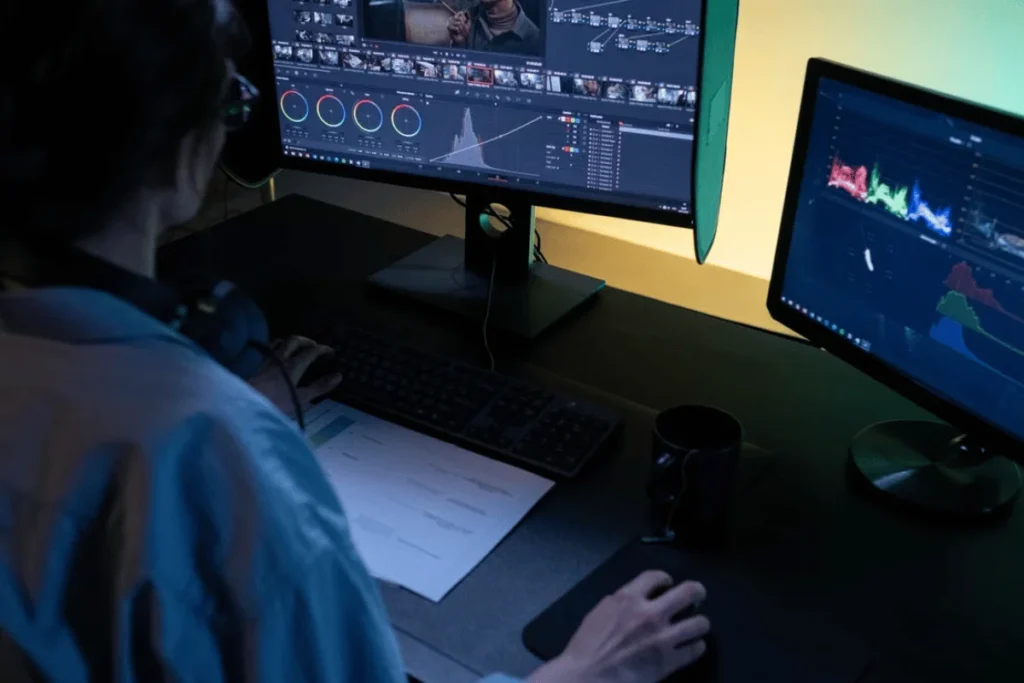
- Color grading: matching and refining the visual tone across shots and scenes
- Sound design and mixing: dialogue cleanup, ambient layering, and final mix
- Visual effects and compositing: cleanup, enhancements, and any CGI integration
International productions typically fall into one of two patterns: doing the full post-production workflow in Nepal to keep the project centralized, or using local support only for on-the-ground tasks like an editor’s assembly cut, dailies management, or a quick color pass, before shipping final assets home for finishing at a studio with an existing pipeline.
Local Facilities: What’s Available in Kathmandu
Kathmandu’s post-production infrastructure has grown substantially in recent years, particularly for a market of its size. Editing suites built around industry-standard tools like DaVinci Resolve, Adobe Premiere Pro, and After Effects are increasingly common, and dedicated color grading rooms with calibrated monitors now support proper digital intermediate work rather than “good enough” color correction on a laptop. Audio post has advanced too, with the country’s first Dolby Atmos-certified mixing stage now operating in Kathmandu, alongside more standard stereo and surround mixing setups suited to broadcast and streaming delivery.
That said, Nepal is not yet a market with dozens of interchangeable post houses the way Mumbai or Bangkok is. Capacity is real but limited, so booking suite time and confirming equipment availability well ahead of your shoot dates matters more here than it would in a larger post-production hub.
Data Security and Backup on Set
Before any editing conversation matters, footage has to survive the shoot itself. Standard practice for an international production in Nepal should include:
- Triple-redundant backups at the end of each shoot day, ideally to at least two separate physical drives plus a cloud or off-site copy where connectivity allows
- Checksum verification on transfers, so a corrupted copy doesn’t get discovered days later
- Clear chain-of-custody logs for drives, especially when footage passes between a local DIT, a producer, and an editor
- Encrypted drives for any content with confidentiality requirements, which matters more than usual for unreleased brand campaigns or documentary subjects who’ve been promised discretion
None of this is unique to Nepal, but the consequences of skipping it are higher here simply because reshooting a remote Himalayan location isn’t a same-day fix if something goes wrong.
Working Remotely: Cloud Workflows and the Bandwidth Reality
International productions increasingly want to review dailies or collaborate with an editor back home in near real time. Nepal’s internet infrastructure has improved substantially, and as of the most recent Speedtest Global Index data, the country now has the fastest average fixed broadband speeds in South Asia, regulated under the Nepal Telecommunications Authority. That’s a meaningful shift from a few years ago.
Even so, that average is measured against Kathmandu’s urban fiber networks. Bandwidth away from the city, and especially in the mountain regions covered in our high altitude filmmaking guide, drops sharply and can’t be relied on for uploading raw 4K or 6K footage in any reasonable timeframe. A realistic workflow plan usually looks like this: proxy files or select clips get uploaded for remote review from location, while full-resolution originals travel on physical drives, either hand-carried by crew or shipped, once the unit returns to Kathmandu or heads home.
Footage, Data, and Customs on the Way Out
Carrying footage or hard drives across Nepal’s border isn’t usually a complicated process, but international crews should know the general shape of it. Physical media like hard drives and camera cards typically move through the same customs framework that covers other production equipment, managed by Nepal’s Department of Customs. Declaring drives on the way in, keeping equipment manifests accurate, and working with a local production partner who handles this routinely all reduce the risk of delays at the airport. Our guide on customs clearance for film equipment covers this process for gear more broadly, and the same principles apply to media leaving the country.
Choosing Where to Post: Local vs Home Studio
There’s no universally correct answer here, but a few factors tend to decide it:
Post locally in Nepal when:
- The production wants a fast turnaround on a rough cut or social content while still in-country
- Budget favors Nepal’s lower post-production rates for early-stage editing
- The project needs a colorist or editor with direct familiarity with the specific locations and light conditions
Post at home when:
- The production has an established post pipeline, VFX house, or sound studio it needs to feed into
- Deliverables require finishing standards (broadcast specs, specific mix formats) tied to a home-market distributor
- The volume of footage and complexity of the edit justify a full studio environment rather than a suite booked by the week
Many international productions land on a hybrid: an assembly cut and basic color pass done locally to keep momentum, with final conform, grading, and mix completed at the production’s home studio.
Frequently Asked Questions
Can a full international production finish its entire post-production process in Nepal?
Yes, Kathmandu now has editing, color grading, and Dolby Atmos-certified sound mixing facilities capable of handling a complete workflow, though capacity is more limited than in larger regional post-production hubs.
Is Nepal’s internet fast enough to upload raw footage for remote review?
Urban fixed broadband has improved significantly, but uploading full-resolution 4K or 6K footage from remote shoot locations usually isn’t practical. Most productions send proxies for review and move full-resolution files on physical drives.
Do we need special customs paperwork to take footage out of Nepal?
Hard drives and media generally move through the same customs process as other production equipment. Declaring items accurately on arrival and working with a local production partner minimizes delays.
Should we hire a local editor or bring our own?
It depends on the workflow. A local editor familiar with the locations can be efficient for an assembly cut or quick turnaround content, while productions with an established home pipeline often prefer to ship footage for final editing there.
How do we make sure our footage is safe on a remote shoot?
Triple-redundant backups at the end of each shoot day, checksum verification on transfers, and encrypted drives for sensitive content are standard practice, regardless of location.
Working With a Local Production Partner
Post-production planning works best when it’s part of the production conversation from day one, not something figured out after wrap. A local partner who understands Nepal’s current post-production capacity, data logistics, and customs process can help a production decide early whether to post locally, ship footage home, or split the difference, rather than scrambling to figure it out once the crew has already left.
Need post-production support built into your Nepal production plan? Icefall Productions coordinates editing, color, sound, and secure data logistics alongside full production services. Get in touch to talk through your workflow, or explore our full production services.